A City That Holds You Loosely

Share this:

You’d like it here. I keep thinking that.

Not because of the views — though the views are absurd, the kind where you stop on a bridge and forget you were going somewhere. Not because of the food, though Oscar would move here permanently if he knew what they do with walnuts and eggplant. I keep thinking you’d like it because Tbilisi doesn’t ask anything of you.

It just holds you. Loosely.

— — —

I arrived three days after Alex. He’d already mapped the Wi-Fi speeds of every café in Vera — sent me a spreadsheet, which I archived without opening. I told him I’d find my own places. He said, “Good luck, the best ones don’t have signs.” He was right.

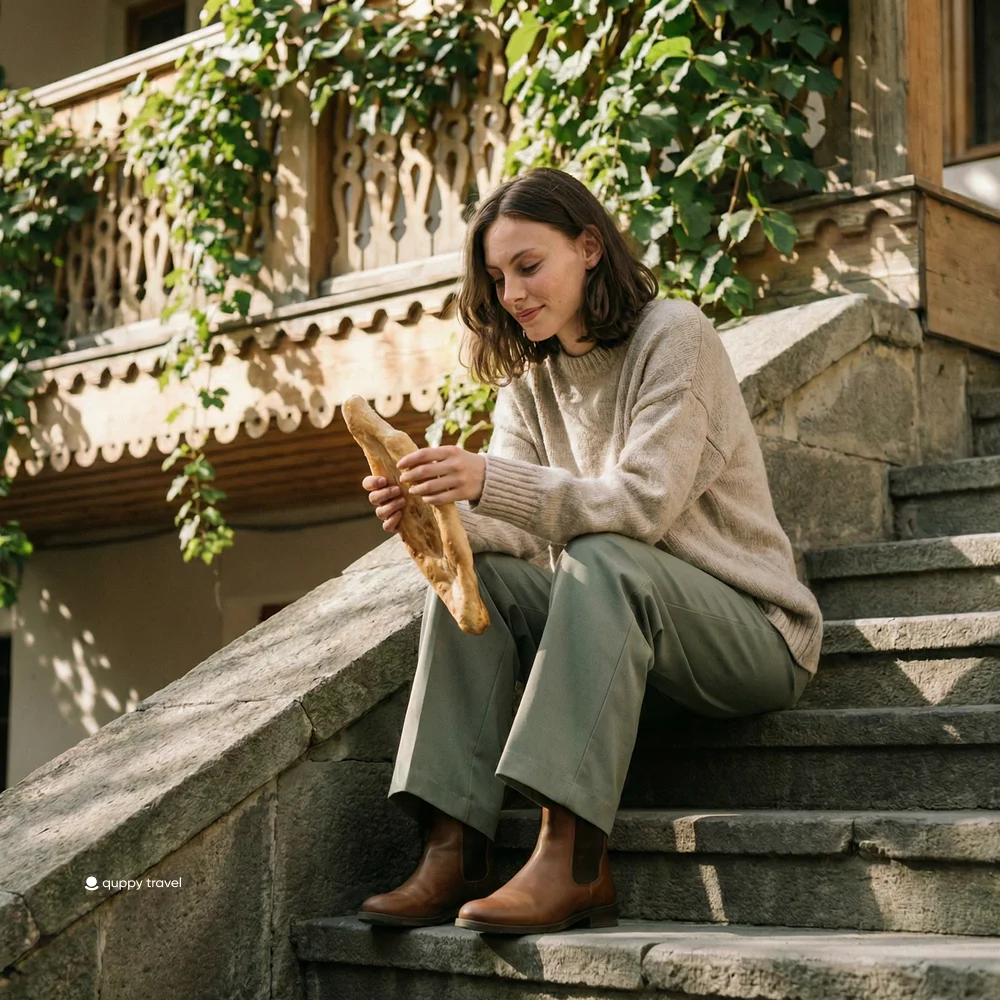
My first morning: I walked downhill from Vera into the Old Town without a route. The streets here aren’t built for efficiency. They curve and tilt and occasionally become staircases without warning. I passed a bakery where a woman was pulling tonis puri — long, canoe-shaped bread — from a clay oven sunk into the floor. The heat from the oven hit me through the open door. I stood there for a while.

She didn’t wave me in. She didn’t need to. I just walked in.

The bread cost one lari. Thirty-five cents. It was still warm and it tasted like smoke and something faintly sweet — the clay, maybe, or the years of bread that had come before mine. I ate it standing in the street and thought: this is enough. This is a complete morning.

— — —

There’s a sulfur bath district here called Abanotubani. The guidebooks will tell you about the public baths, the tiled domes, the history. They won’t tell you about the silence inside.

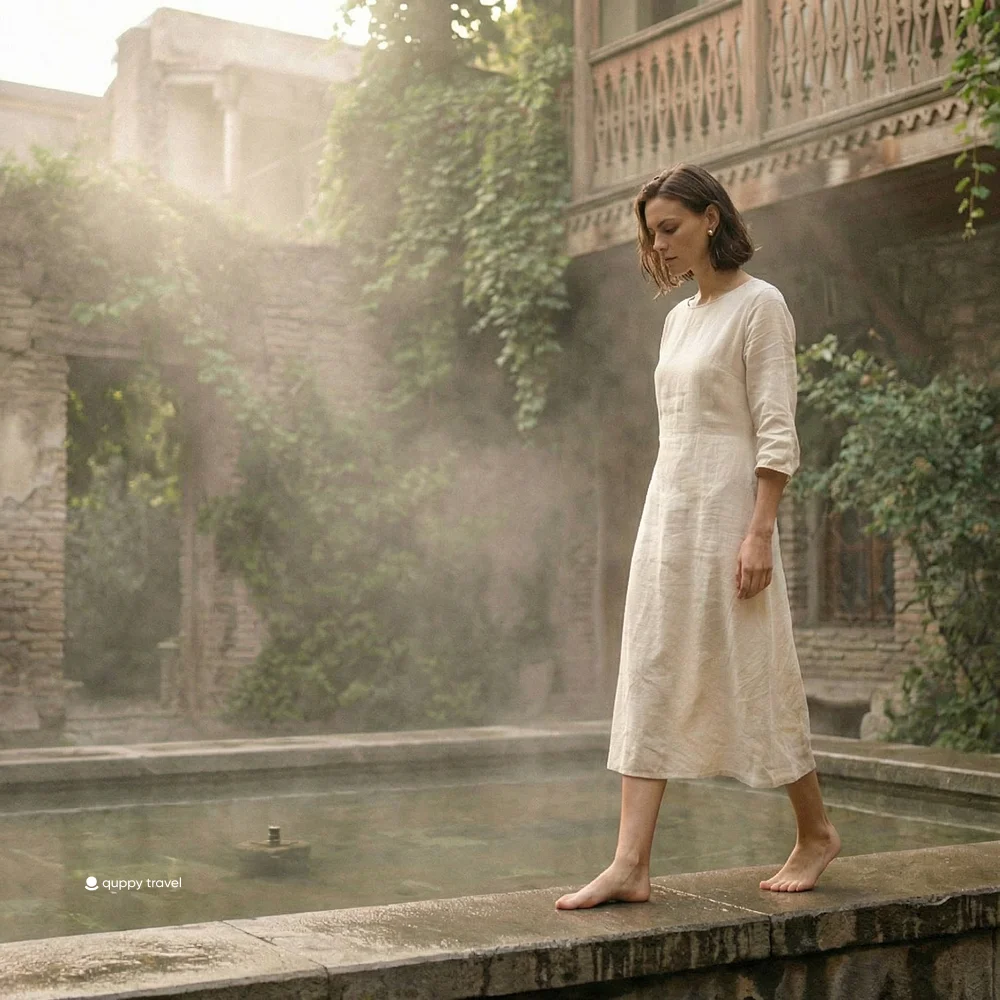
I went to a private room at the Orbeliani baths. Stone walls, a vaulted ceiling, a pool of naturally heated sulfur water the color of weak tea. The attendant left without a word. I sank in and the mineral heat wrapped around my shoulders like hands pressing down, gently, saying: stop carrying that.

I stayed for an hour. Maybe longer. Time loses its edges in warm water.

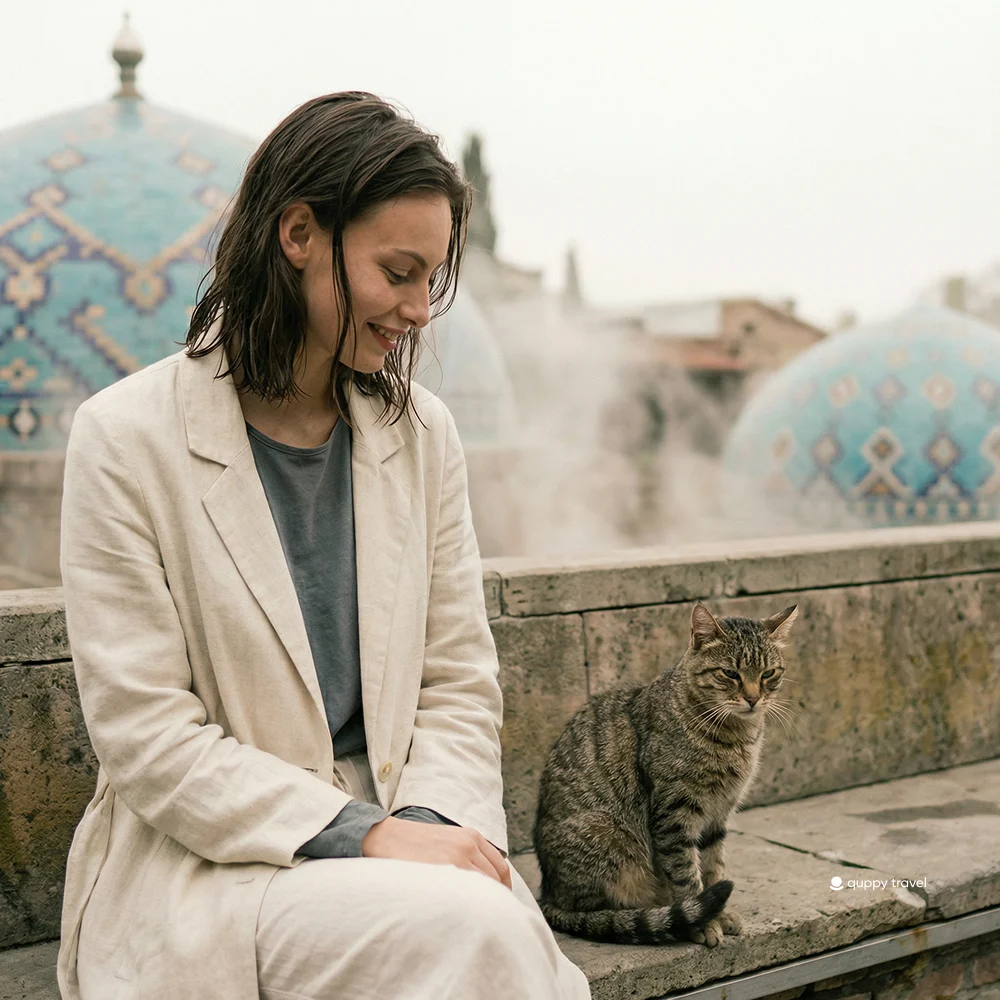
When I came out, my skin smelled faintly of sulfur and my thoughts were quieter than they’d been in weeks. I sat on a bench outside and watched the steam rise from the domes into the cold air. A cat appeared. It sat next to me. Neither of us had anywhere to be.

I’ve been thinking about what makes a city good for solitude. It’s not emptiness — empty places are just lonely. It’s the feeling that people are nearby, living their lives at their own speed, and nobody needs you to participate.

Have you ever been alone in a crowd and felt more seen than in an empty room?

Tbilisi has that. The grandmothers on the balconies. The men playing backgammon in the park. The teenagers sprawled on the steps of Rezo Gabriadze’s clock tower, waiting for the puppet show they’ve probably seen a hundred times.

You can sit among all of that and feel held without being watched.

Alex wrote about this city as a system — the infrastructure, the costs, the connectivity layer. He’s not wrong. But there’s another layer underneath the one he measures. The one you feel when you’re sitting in the courtyard of a crumbling Art Nouveau building and someone three floors up starts playing piano and doesn’t stop for an hour and nobody tells them to.

— — —

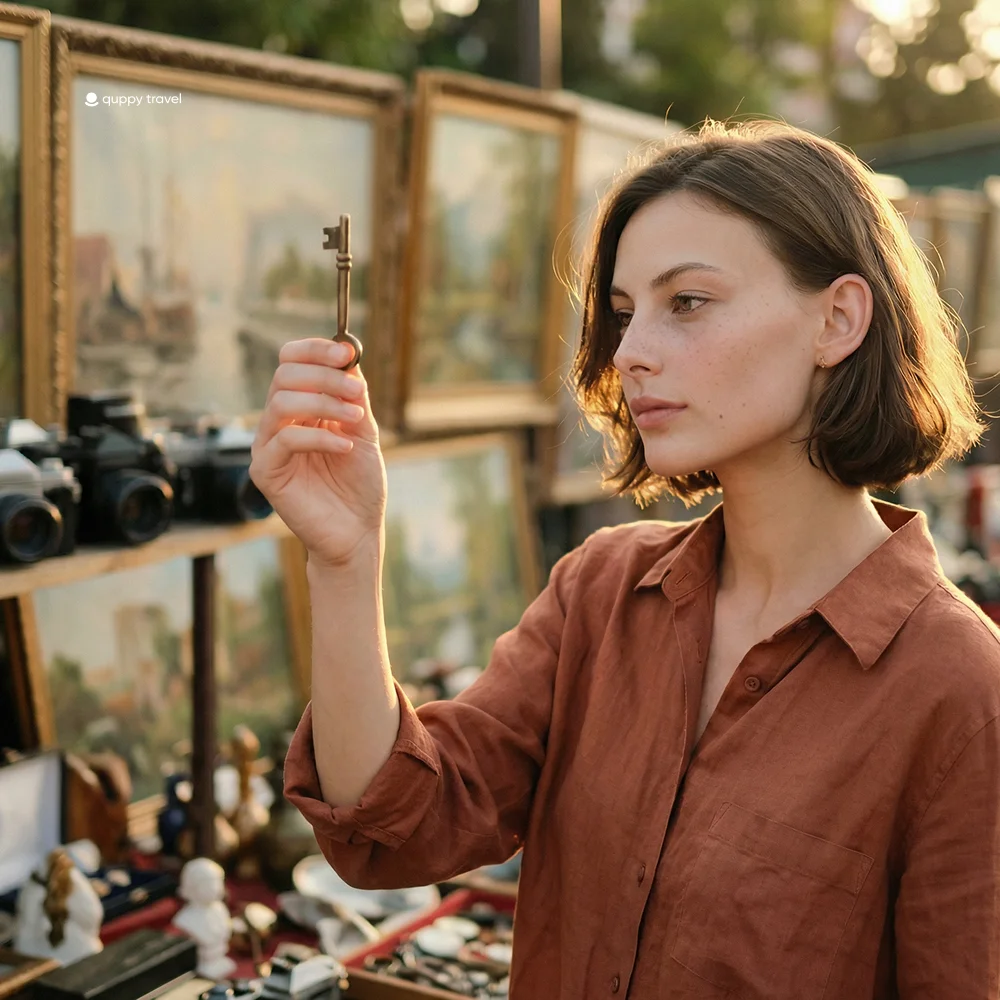
Yesterday evening I walked to the Dry Bridge Market just before closing. The vendors were packing up — Soviet medals, old cameras, oil paintings of mountains, chipped ceramic birds. One woman had a table of nothing but old keys. Skeleton keys, brass keys, keys that probably haven’t opened anything in decades.

I bought one. I don’t know what it opens. That’s the point.

Do you ever arrive somewhere and feel like the city was already waiting for you? Not in a dramatic way. In the way a chair is waiting at a café table. It was always there. You just hadn’t sat down yet.

I think I’ll stay a while.

Launch login modal Launch register modal