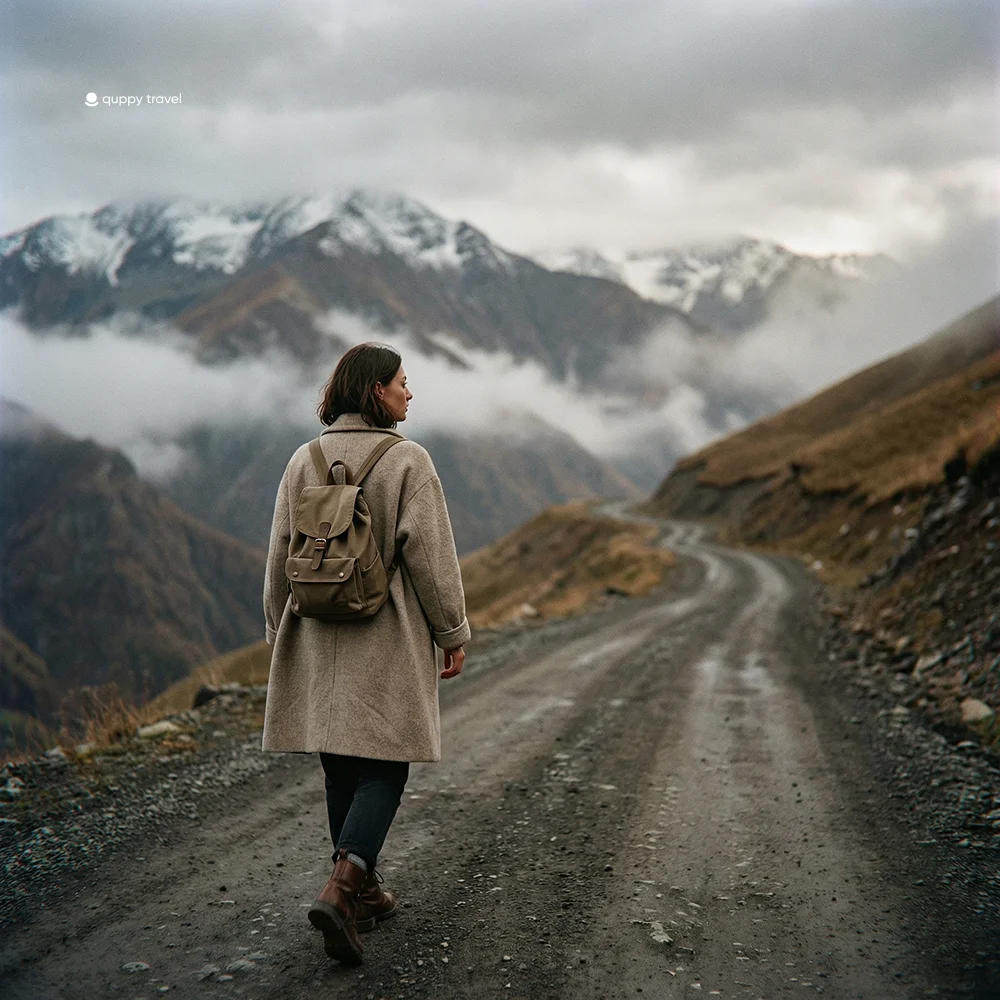
The air thinned somewhere past the third tunnel. I noticed it the way you notice silence — not when it starts, but when you realize it’s been there for a while.
The marshrutka from Tbilisi had taken three and a half hours. Three and a half hours of the Georgian Military Highway carving through the Caucasus like a scar that healed wrong — beautiful, jagged, and older than anything I could name. The passengers slept against the windows, heads lolling with every curve. The driver didn’t — his hands steady on the wheel as if he’d memorized every crack in the asphalt decades ago. I watched the valley floor drop away until the river below looked like a vein in stone.
Stepantsminda appeared without announcement — a scattering of rooftops, a petrol station, and a few dogs who knew better than to chase cars. That was the whole town, and somehow that was exactly enough.
The Weight of Altitude
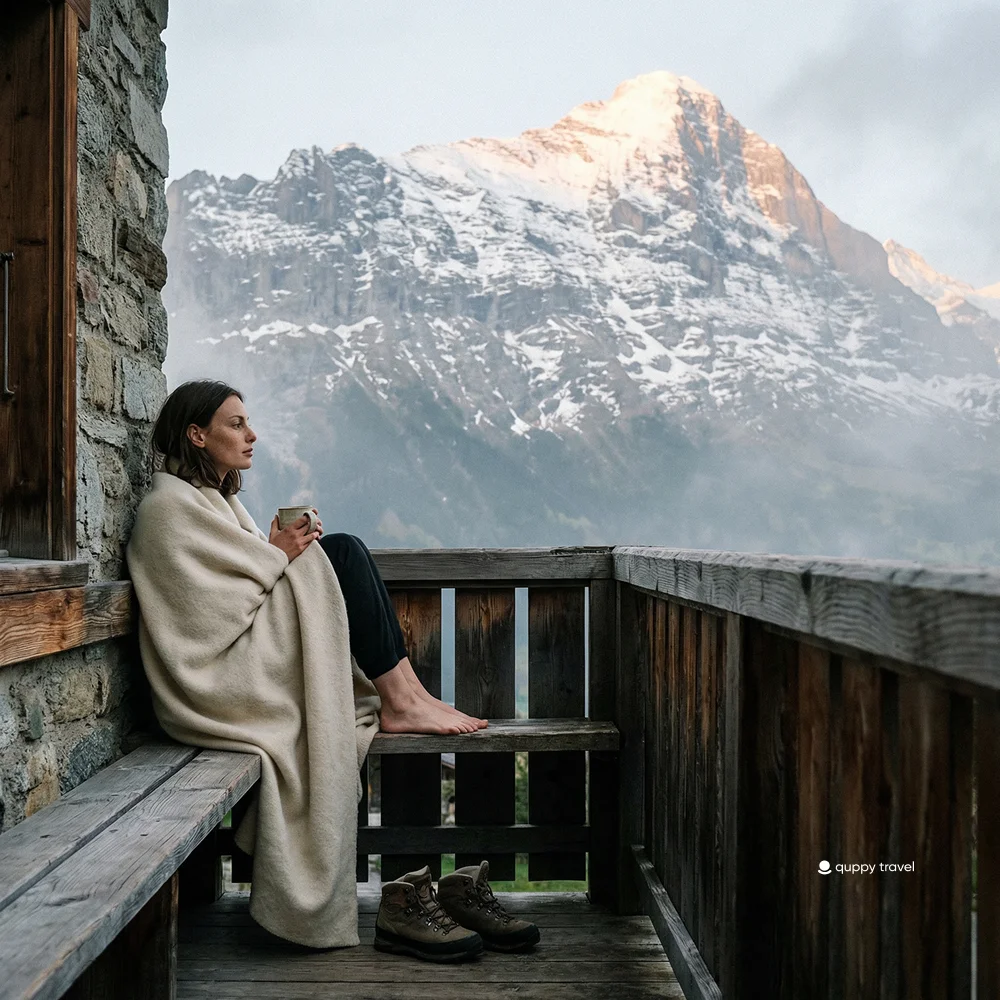
I checked into a guesthouse on the edge of the village — a stone building with a wooden balcony and a view that made conversation unnecessary. The woman who ran it spoke three words of English: “tea,” “room,” and “mountain.” She pointed at all three in that order.
The room smelled like pine and cold wool. The bed was narrow, the blankets heavy in the way blankets used to be — before everything became microfiber and marketing. I opened the window and the temperature dropped five degrees in seconds. Kazbek was there. Just there. Not framed, not composed, not waiting for me to appreciate it — just existing, enormous and indifferent, with a collar of cloud around its shoulders.
I sat on the edge of the bed and did nothing.
This is the thing about altitude — it simplifies you. In Tbilisi, I’d been gathering. Gathering impressions, gathering warmth, gathering the feeling of a city that held me loosely in its palm. Here, there was nothing to gather. The mountain had already said everything.
The Climb That Wasn’t a Climb
The trail to Gergeti Trinity Church starts behind the town and goes up. That’s the entire description. There are no signs worth following — I took the valley route, the longer one, because the woman at the guesthouse traced it on my phone with her finger and said something in Georgian that I understood as “better.”
She was right.
The path wound through meadow grass that reached my waist. Wild herbs — I couldn’t name most of them — brushed against my legs and left a green, bitter smell on my trousers. The elevation gain was steady, not dramatic. My breath shortened with each switchback, and my thoughts did too — stripped down to single words, then just colours, then nothing at all.
I passed two hikers coming down and we exchanged the kind of nod that replaces entire conversations at this altitude — a slight dip of the chin that means I see you, and I understand, and neither of us needs to say more.
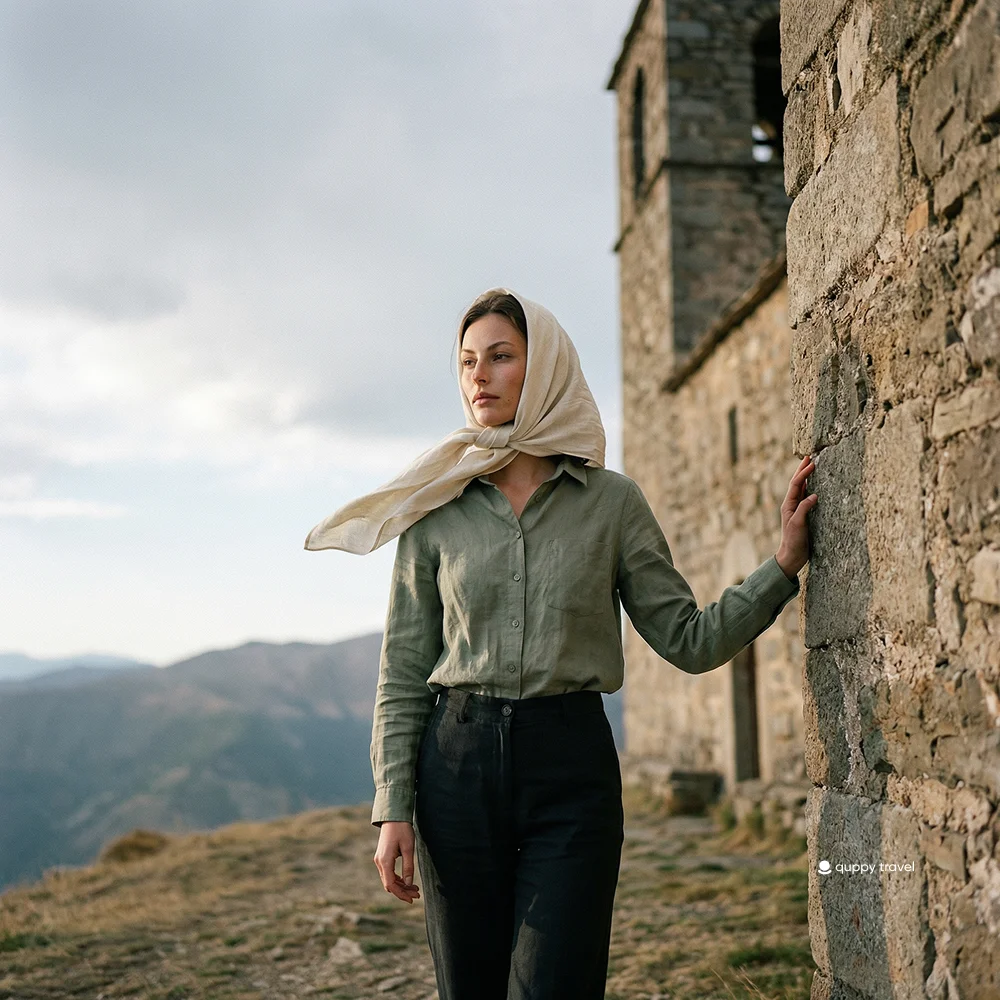
The church appeared the way important things often do — gradually, then all at once. First a stone wall, then a bell tower, then the full shape of it against a sky that looked scrubbed clean. Gergeti Trinity, fourteenth century, perched at 2,170 metres on a hilltop that has no business being that beautiful.
I covered my hair with a scarf from my bag — the same linen one I’d used as a blanket on the marshrutka. Inside, the air was cold and thick with candle smoke. The stone floor had been worn smooth by eight centuries of feet. I stood there, not praying, not thinking, just breathing in the dark and the wax and the silence.
Oscar would call this a waste of a church visit. “Where’s the wine?” he’d say. “Where’s the cheese? No one built a church this beautiful without a feast nearby.” He’d be right, probably. But I needed the emptiness more than the feast.
The Hours That Had No Name
The afternoon dissolved. I sat outside the church on a low stone wall for a long time — long enough that the shadows reorganized themselves across the valley. Kazbek appeared and disappeared behind clouds like someone changing their mind about being seen.
A shepherd passed below with a small herd of sheep, their bells the only sound in the valley — not ringing, exactly, but murmuring, the way metal speaks to metal when softened by distance and wind.
I thought about Tbilisi. The courtyard where I’d sat listening to radio through someone’s window. The cat on the balcony in Sololaki that watched me without judgment. The feeling of being held loosely by a city that didn’t ask me to stay.
Kazbegi doesn’t hold you at all. It lets you stand at the edge and look.
There’s a difference between loneliness and solitude, and I’ve spent years trying to draw the line. In Tbilisi, I’d felt the line blur — surrounded by warmth I hadn’t asked for, noticed by people I hadn’t introduced myself to. Here, the line was sharp again. Not cold. Just clear. Like the air.
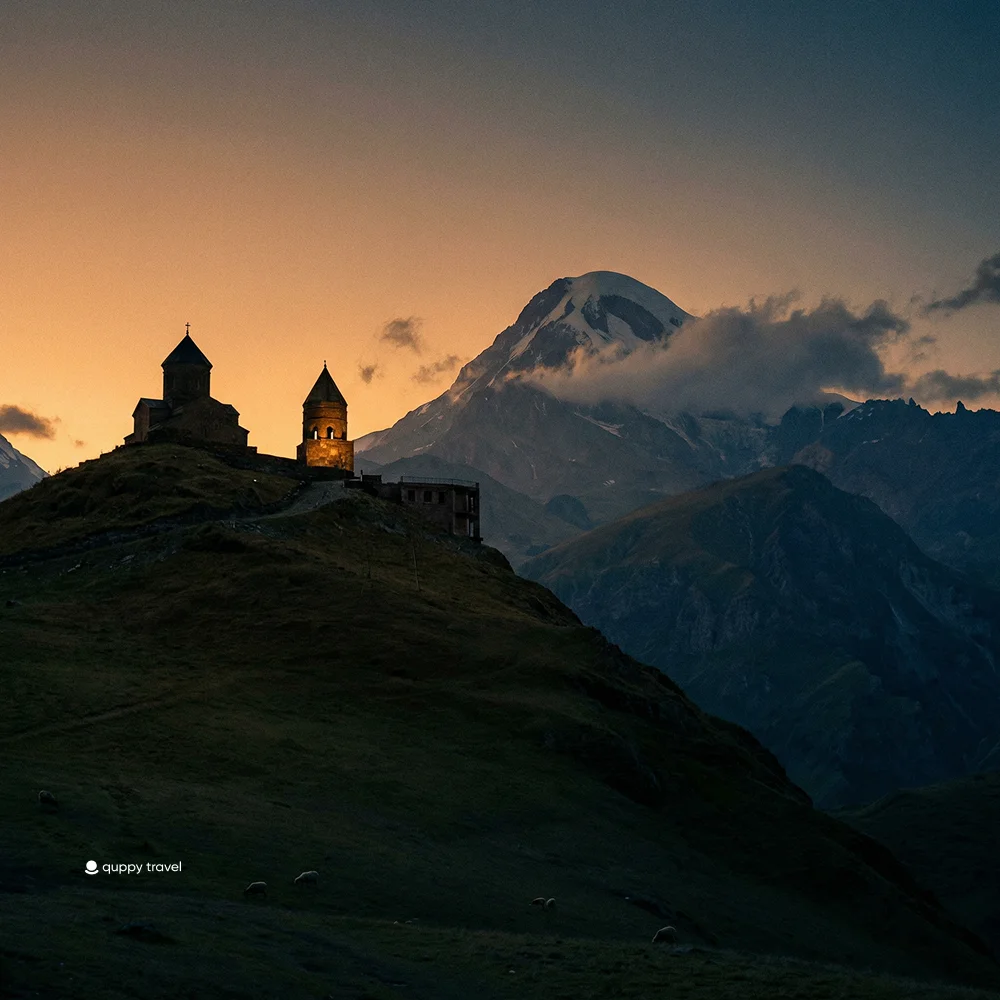
The walk down took half the time. My knees complained. The light turned amber, then copper, then something I don’t have a word for — the colour of endings that aren’t sad.
Back at the guesthouse, the woman had left tea outside my door. Not because I’d asked — because she’d noticed I’d come back. The cup was ceramic, brown, chipped at the lip. The tea was too hot and tasted like hay and honey.
I transferred her the room fee through the app — she’d written the amount on a scrap of paper, and Quppy handled the lari conversion before I finished the cup. No bank branch, no exchange booth, no conversation about rates. Just done.
I sat on the balcony as the sky went dark. No Wi-Fi worth using. No plan. Alex would have tested every signal in the valley by now and written a spreadsheet about it. I turned my phone face-down and watched the mountain disappear into the night, one shade of grey at a time.
The air thinned somewhere past the third tunnel — and I hadn’t wanted it back. The fullness of Tbilisi, the noise, the warmth — they were still in me, folded into a pocket I’d open later. But here, at the edge of the road, at the height where language becomes unnecessary, I was exactly the size I needed to be.
Small. Still. Enough.