
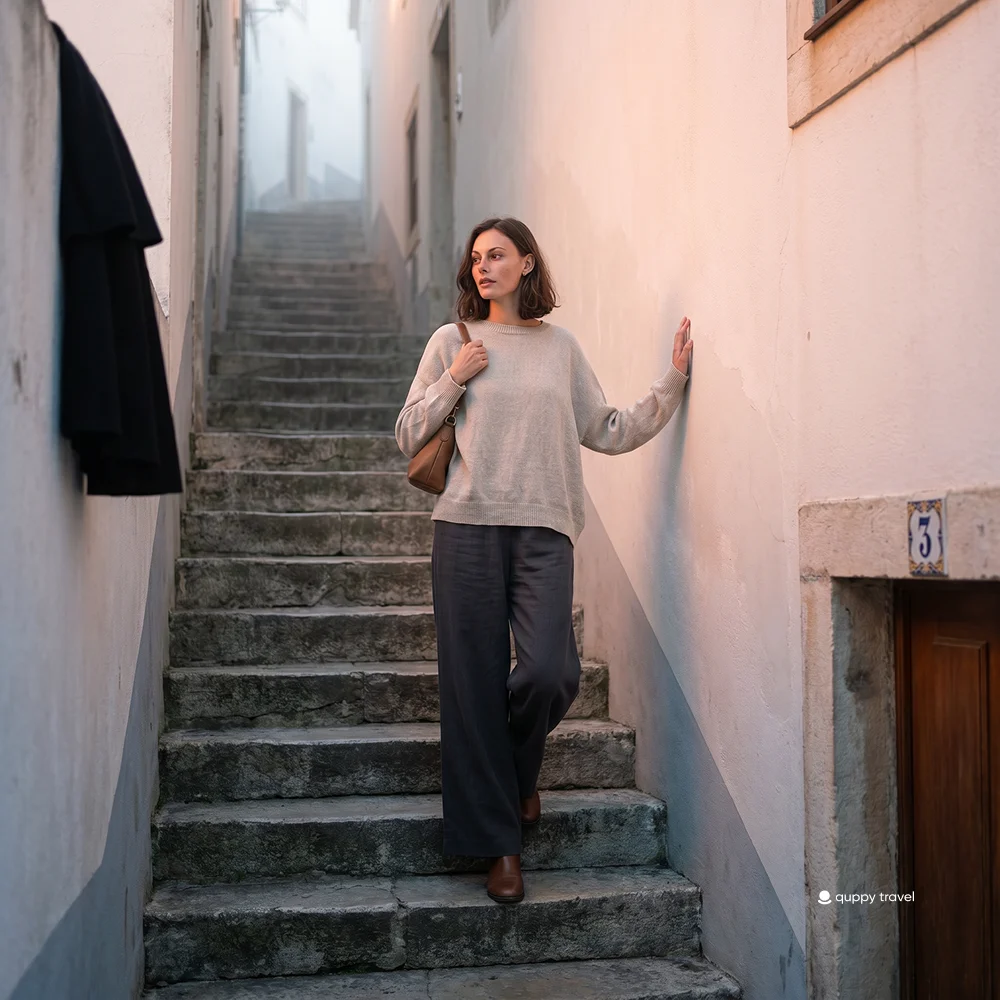
The train from Porto arrived just after dawn. I walked up the hill with my bag cutting a little into my shoulder, and by the time I reached the old quarter, the light had changed twice — pink to amber, amber to something softer that had no name.
Coimbra didn’t greet me.
It didn’t need to. In Tbilisi, a city held me loosely; in Kazbegi, the silence asked for nothing. Coimbra asks for even less — and somehow that is the most generous thing a place can do.
The Hour Before the Library Opens
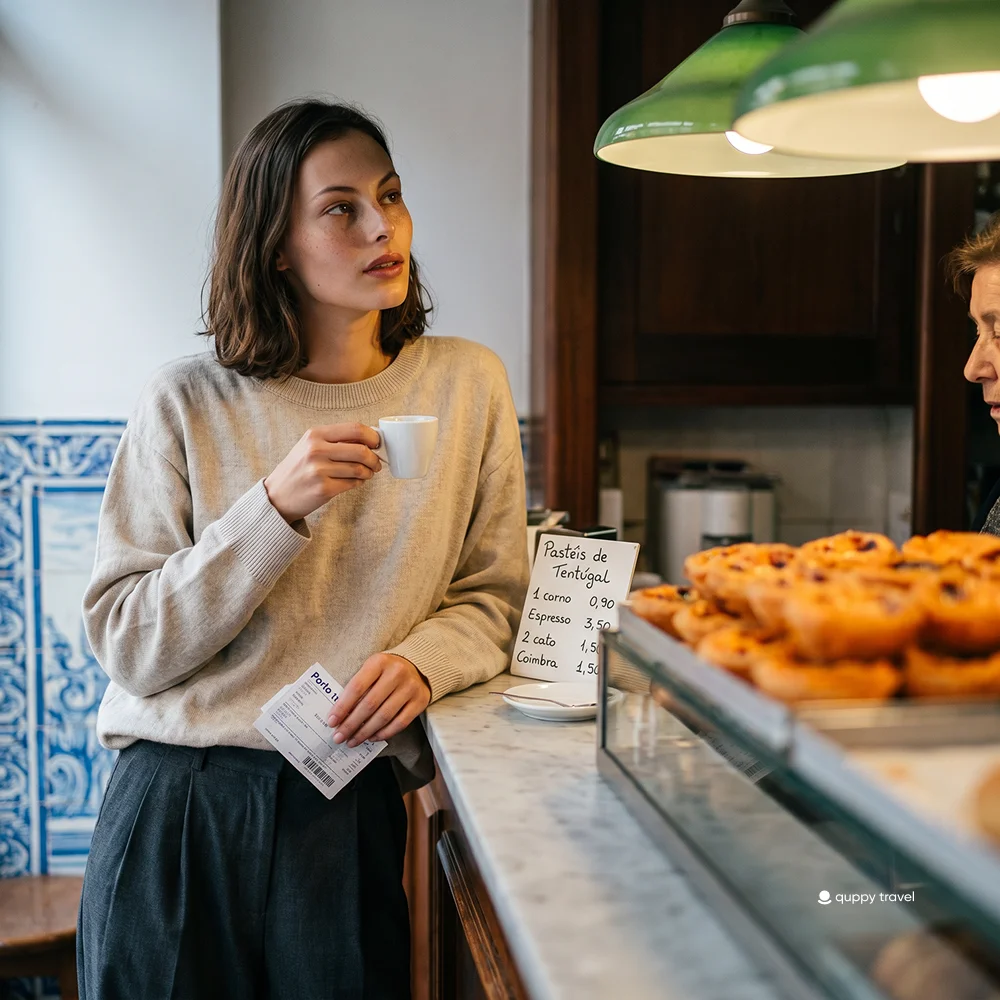
I found the café before I found my apartment. This is a habit I can’t seem to break. The counter was narrow, the light was low, and a woman behind it was arranging small almond-paste pastries on a tray — pastéis de Tentúgal, wrapped in filo so thin you could almost see her thumbprint through the shell.
I pointed. She nodded.
The coffee was darker and more forgiving than I’d expected, and I ate the pastry standing up, crumbs on my sleeve I didn’t bother to brush off. She didn’t ask where I was from. She didn’t ask how long I was staying. She poured hot water from a kettle into a mug for the man next to me, who had his coat collar still turned up.
Outside, the stones were cold through my sneakers. A few black student capes were folded over the arms of people climbing the stairs toward the university — weightless-looking things, thrown on in a hurry. No one was in a hurry otherwise. The day was arriving at its own pace, and the city had agreed to let it.
Where to go: If you’re in the upper town, walk down Rua Quebra Costas in the morning. Stop at the small pastry counter nearest the cathedral — not the one with the line outside, the one without a sign. If the woman behind the counter doesn’t look up when you walk in, you’re in the right place.
Sung Low
I had read that Coimbra’s fado was different. I hadn’t understood how different until I sat in a small venue near Rua da Ilha, and the first guitarist walked in without acknowledging the room.
Coimbra’s fado is sung only by men — only by students, or those who once were. They wear the long black cape of the university, a garment that looks heavier than it is and carries a smell of wool and candle smoke from the stone rooms it has hung in. The audience doesn’t clap. When a song moves them, they cough once into a closed fist. That is the applause.
I watched a fadista — maybe twenty-five, maybe older — close his eyes for most of a song about a woman who was either dead or just in another city. Halfway through, the room coughed. He didn’t look up. I cleared my throat because it seemed rude not to. The man next to me smiled without turning his head.
In Tbilisi, I once sat in a courtyard for an hour listening to the static of a radio through a cracked window. That had felt like overhearing someone’s private grief. This felt the same — except I’d been invited, and the grief had been rehearsed.
Where to go: Fado ao Centro on Rua Quebra Costas runs nightly shows that feel less like performances than ceremonies. Smaller venues also host informal student-led sessions — ask at the tourist office, or follow the sound if you hear a guitar drift from a doorway after dark.
Books Older Than Countries
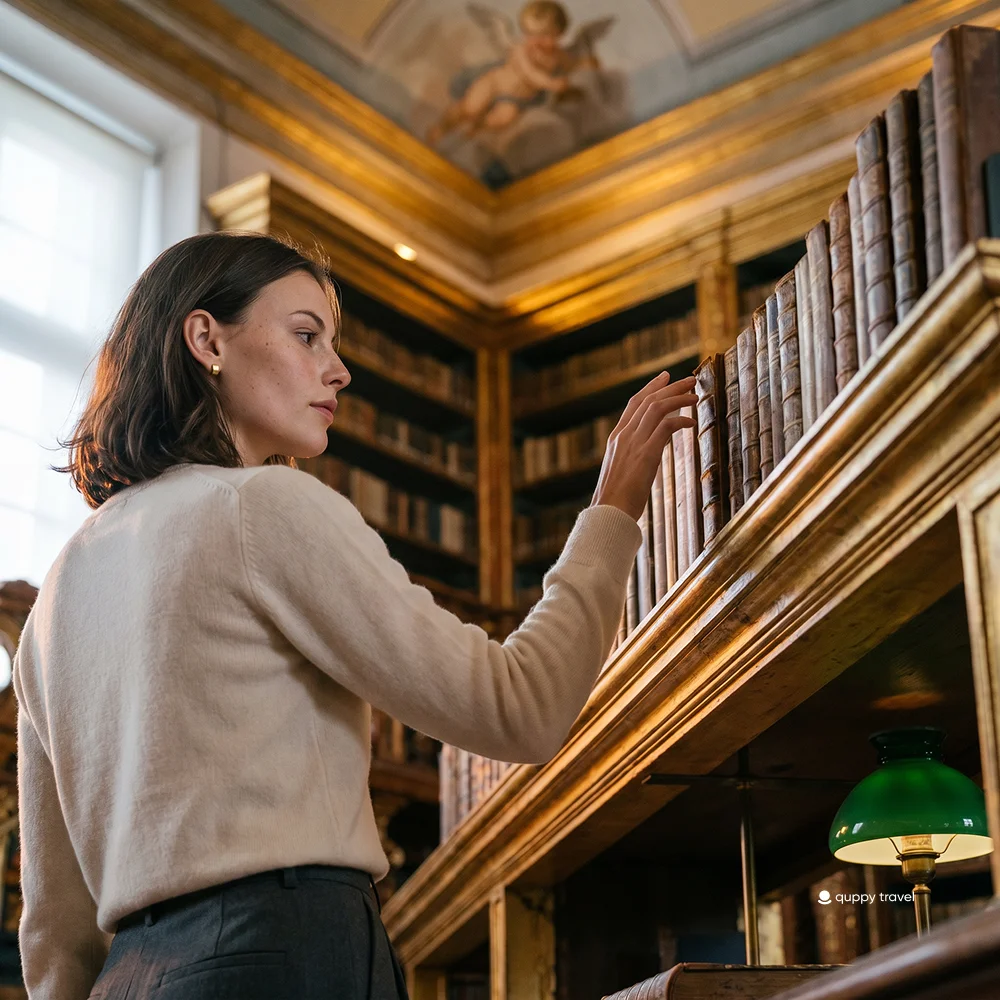
The Biblioteca Joanina is the kind of place that makes you speak more quietly without being told to. Gilded wood, ceiling paintings, shelves the height of two stacked doors. The room smells of leather that has aged into something almost sweet, and of the wax they use to seal the floors.
They keep a colony of bats inside — a detail that sounds invented until you learn it’s true. The bats emerge at night to eat the insects that would otherwise eat the books. Centuries of volumes, protected by wings.
I walked through slowly.
Then I walked through again.
Afterwards I found a smaller bookshop on a street whose name I didn’t write down. The owner, a woman who looked like she’d been reading the same novel for three decades, spoke French with me because I’d asked about a title in Portuguese. She handed me a paperback of Eugénio de Andrade and said, “Don’t buy it — just borrow it and bring it back before you leave.”
I said I might not come back in time. She shrugged. She’d heard that before, and she knew it wasn’t quite true.
Where to go: Book a timed slot for the Biblioteca Joanina well in advance. For the smaller, stranger bookshops, wander the lanes between Sé Velha and Praça 8 de Maio. The best one will not have a clear sign — only a narrow door and a window stacked with books in at least four languages.
The River Doesn’t Need You to Explain
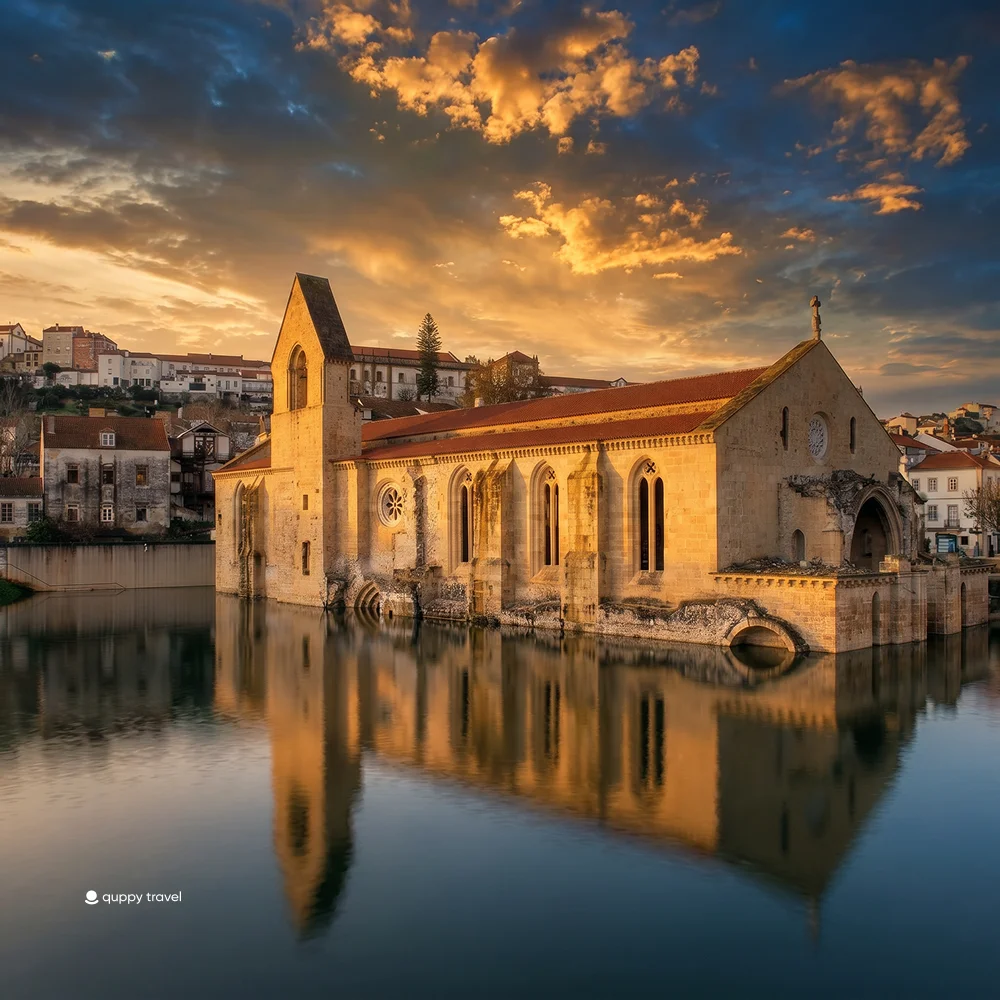
The Mondego is the river Coimbra has always had. On the opposite bank, the ruins of the Santa Clara-a-Velha monastery sit lower than the waterline — flooded for centuries, then excavated in a slow act of archaeological patience. You can walk through the shell of it now. The stone is pale, the arches are broken, and the light on the water around them does something strange in the late afternoon — it thickens, or softens, or both.
I crossed the Pedro e Inês footbridge in no particular hurry. The bridge is modern, colored glass underfoot, but it didn’t feel jarring. In Coimbra, old and new share a register — neither insisting, neither apologizing.
On a bench halfway across, I watched two rowers lift their boat from the water. A boy with a dog crossed ahead of me and didn’t look back. The river kept moving, the way rivers do — not going anywhere in particular, just going.
Where to go: Cross from the Portagem side to the Santa Clara side in the late afternoon. Walk through the Santa Clara-a-Velha ruins at a pace that lets the light change on you. The Botanical Garden — one of the oldest in Europe, founded in 1772 — is a short uphill walk if you want your evening to keep its tempo.
A Table for No One in Particular
The tasca had maybe eight tables. A chalkboard listed four dishes. I pointed at chanfana without knowing what it was, and what arrived was a small black pot of goat slow-cooked in red wine until the meat had forgotten its original shape.
Bread. Potatoes. A small bowl of olives the waiter brought unasked, because he’d decided I should have them.
I ate slowly. Nobody looked at my table once. When I finished, the waiter came by, noticed my plate, and asked if I wanted something sweet. I said no. He brought a small glass of something clear and sharp anyway — licor de ginja, on the house — and walked away before I could thank him.
I tapped my phone to pay. Quppy moved the euros without announcing itself, which felt right — a city that doesn’t raise its voice doesn’t need a payment that does either.
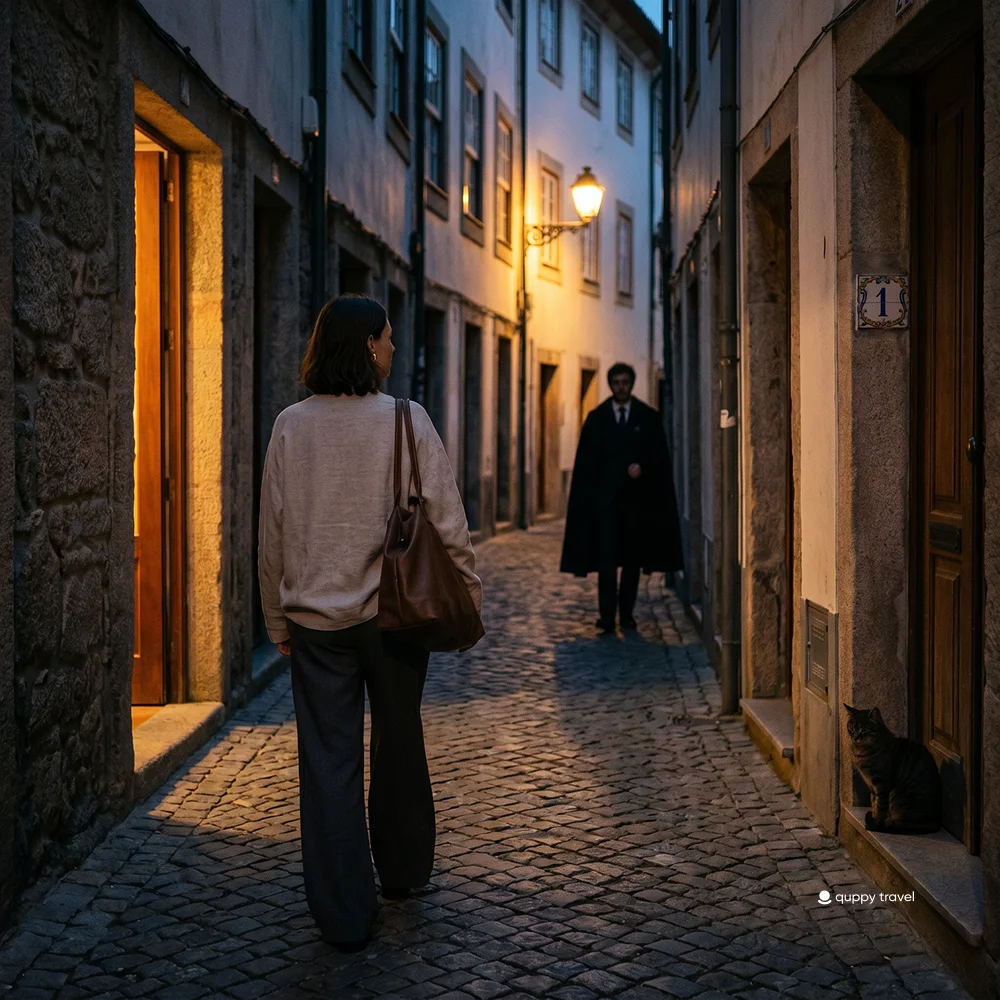
Outside, the street was dark and narrow and almost empty. A cat sat in a doorway with its eyes half closed. Somewhere further down, a student cape passed under a streetlight and was gone.
Where to go: Zé Manel dos Ossos, near Largo da Portagem, is the one most people will tell you about — and rightly so, but go early or late, never on the hour. Smaller tascas scatter through the old quarter; trust the places with chalkboard menus and no translation.
Some cities announce themselves. Some cities ask you to introduce yourself. Coimbra does neither. It lets you come and go, eat and read, walk and sit, and doesn’t need you to report back — and in a year of noisier travel, I can’t think of anything quieter, or more kind.