Mouraria — the bifana counter
I’m leaning against a marble counter in Mouraria with a bifana in one hand and the second beer of the afternoon in the other, and there are no chairs in sight. There are stools. Three of them. Nobody is using them. A painter still in his work shirt and the woman who runs the dry-cleaner across the street are standing because that’s how this works. You don’t sit for a bifana. You don’t even ask. You walk up, you order, you stand, you eat, you nod, you leave.
The balcão here is the kind I won’t put on a list. You’ll find it — or you won’t, and that’s fair too. There are forty bifana counters in this city; the one closest to your apartment is probably the right one.
A bifana, properly: a thin slice of pork shoulder marinated overnight in white wine and garlic and bay leaf, slapped onto a hot plancha that hisses the moment the meat touches it, then served inside a papo seco — a small bread roll that crackles when you tear it. The bread gets brushed with the pan juices before the meat goes in. That brush is what separates a real bifana from a tourist one. Three components, no flourish.
The painter calls the bifana man Senhor Vítor. Senhor Vítor used to take cash only. As of February he takes card. The small black reader sits next to the mustard pot, which drips down its own sides from years of being half-closed. He said he resisted for six years. His wife resisted for seven. Then their grandson explained that the new tourists from Brazil and Spain don’t carry coins anymore, and his wife installed the reader the next Monday. The customs change before the recipes do. I tapped my Quppy card against it; the bifana cost €3.20, the same price it cost last spring, which is what tells you the recipe is the part that hasn’t moved.
The regular two stools over orders by saying one word.
“Mais.“
He’s been ordering the same lunch here since 1991. Senhor Vítor knows. The second dollop is already on the bread before the syllable finishes.
I finished my bifana standing up.
Through Graça to the market at Campo de Ourique
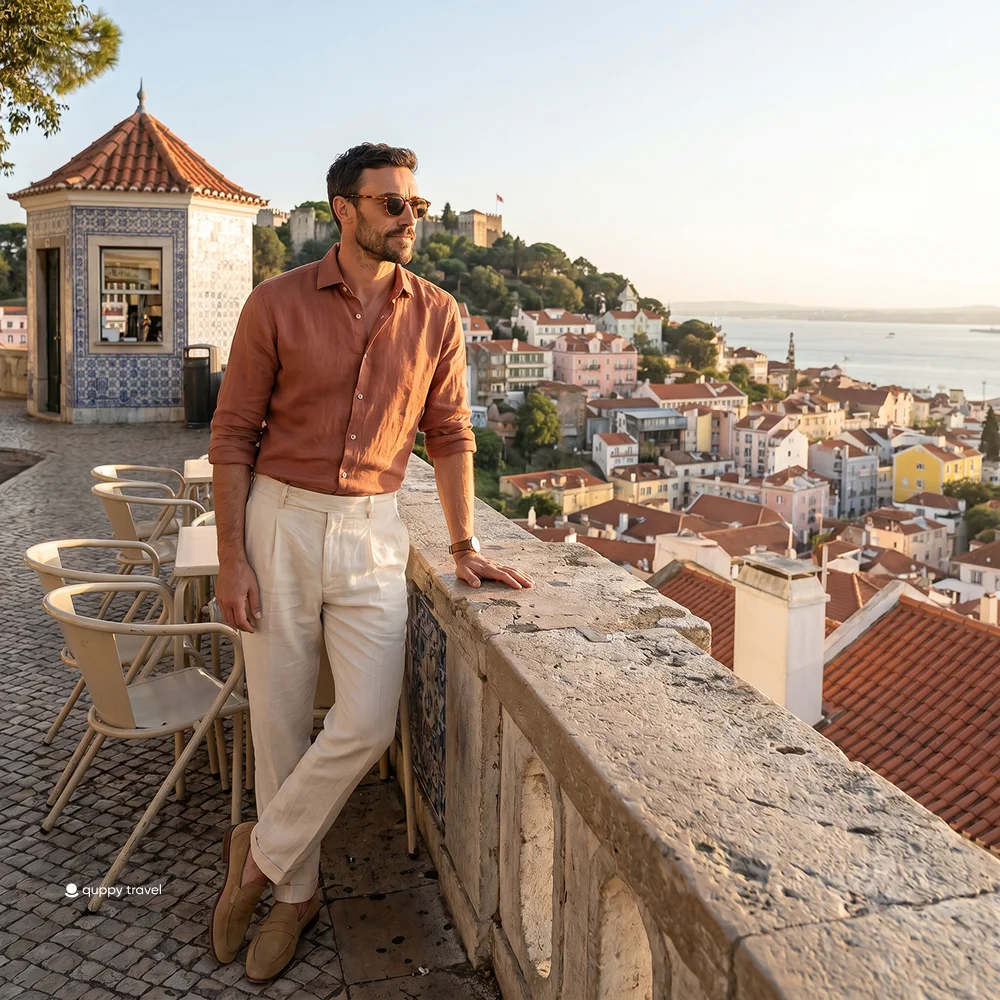
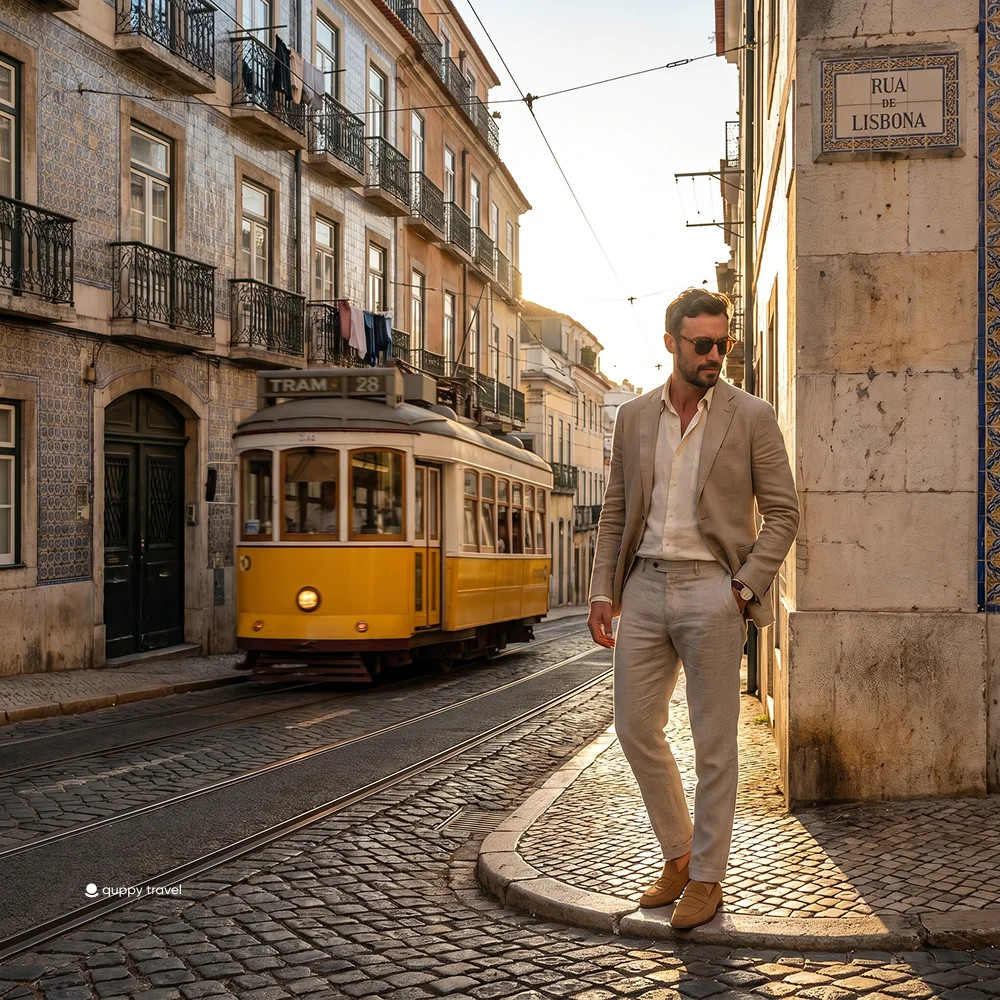
The walk down through Graça and across to Campo de Ourique takes about thirty-five minutes if you don’t stop, which I always do. By five in the afternoon the city is in that hour where the morning’s bakeries have run out of bread and the evening’s tascas haven’t opened yet — Lisbon’s quiet middle, the version that doesn’t get photographed
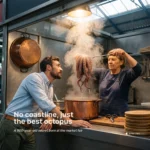
I land at the Mercado de Campo de Ourique on the south side. Not the half that became a wine bar. The other half — the fish counter that still sells what got pulled out of the Atlantic this morning, and the small stand-up tasca beside it where the woman raking arroz de feijão has been doing the same motion since the market opened in 1934. The marble counter is half a metre wide. That’s where you eat.
I order pataniscas de bacalhau — flat irregular salt-cod fritters that sizzle in a batter thin enough to show the cod through it — and a small carafe of vinho verde the colour of pale straw that blooms on the palate when it’s cold enough. The pataniscas arrive on a chipped white plate that doesn’t match the others stacked beside it. The arroz de feijão comes in its own small terracotta pot with the spoon already in it. The fritters are crisp outside and just-collapsing in. The rice is the colour of rust. I eat both standing, leaning on the marble, with the fish counter behind me throwing salt-and-ice cold air across my back.
Mia would tell you Aveiro at quarter to six is a different town. Lisbon at half past five is the same trick on a different clock. The geography moves; the hour does the work.
The woman raking the rice looks up between motions and watches me eat the third patanisca. She doesn’t say anything. I don’t either. She nods slowly. I nod back. Somewhere in that exchange she has decided I’m fine, which is the second-highest form of approval available at a Lisbon counter. The highest is when she pours you an extra splash of vinho verde without asking. She doesn’t do that today. Maybe next week.
My feet hurt. Worth it.
Largo de São Domingos — A Ginjinha
By half past seven the sky goes the colour blue it goes just before dinner — the forty-five-minute window between when the offices spill into the streets and when the dinner crowds spill into the restaurants. If you know where to stand, it’s the best forty-five minutes of any Lisbon day.
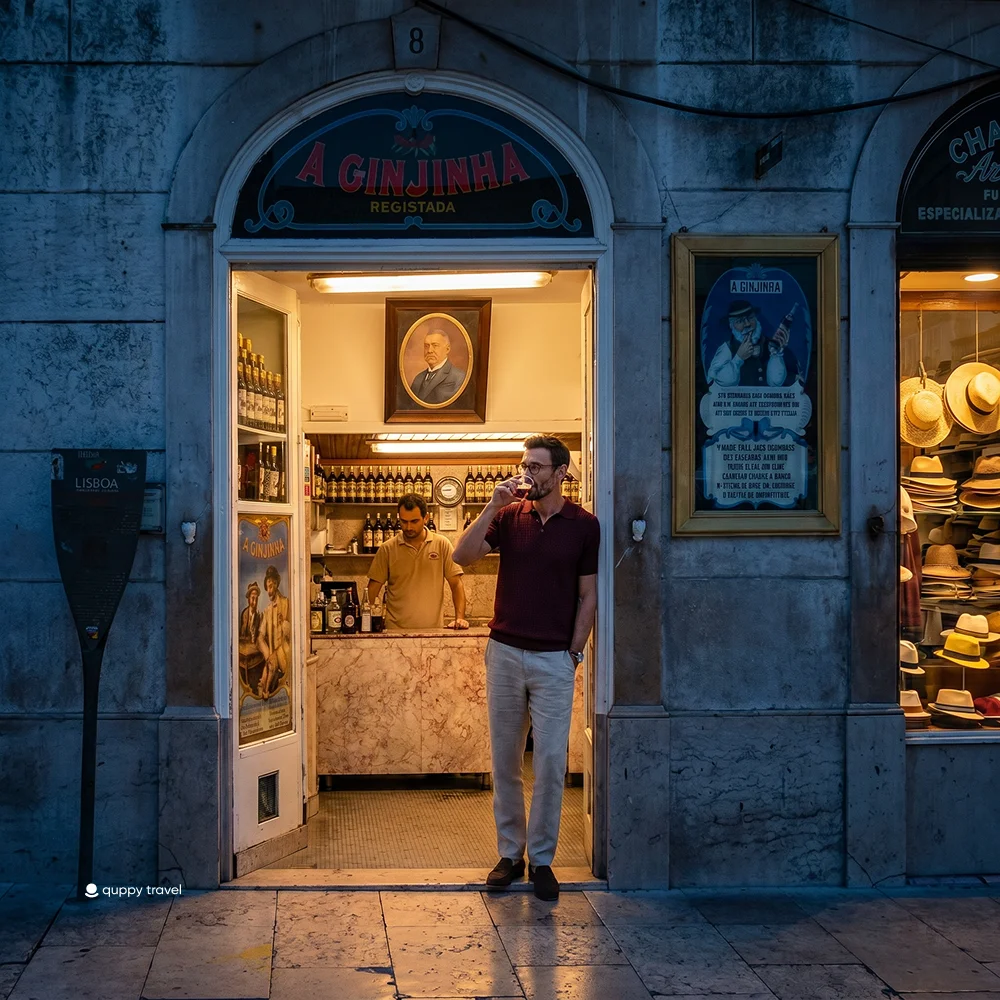
I walk to Largo de São Domingos. There is a small doorway, narrower than you’d think, with hand-painted blue letters above it that read A Ginjinha. Open since 1840 — older than the elevator, older than the telephone. The bar inside is roughly two metres wide and there is room for three customers if they like each other. Everyone drinks at the doorway or on the cobbles outside. There are no chairs. There have never been chairs.
You order one of two things. Com. With the cherry. Or sem. Without. €1.50. The pour is half a shot of ginja — sour cherry liqueur thickened with sugar and time — in a small plastic cup. The cherry, if you ordered com, sits at the bottom. You drink it in two sips. The first is sweet. The second is the cherry, which has spent a year absorbing the alcohol and is now harder to chew than you expect. You stand in the doorway. You watch the square. You leave the cup on the small stack of empty cups by the threshold.
The man pouring tonight is in his sixties, in a white shirt and a black bow tie gone grey at the edges from being washed since the seventies. He doesn’t speak unless he has to.
In Porto, Rui taught me that on a Sunday you don’t clear the pot — you come back to it. A Ginjinha runs the same rule on a different scale. The cherry left at the bottom of the cup is the same gesture: you don’t finish what you came to finish. You leave a little. You walk back to the corner. You come back tomorrow.
I leave my cup on the stack. The cherry is still in it.
Do them in this order

If you ever try to do all three counters in one afternoon, do them in this order. Don’t sit down between them. Don’t order water. Don’t carry a fork. The point is that you eat with your hands or with the spoon already in the dish, and you finish in two sips or three bites, and you walk on.
Some food was designed for tables. Some was designed for the curve of your palm and the angle of the counter. Lisbon, on its quiet afternoons, is mostly the second kind. The chairs are optional. The walk is the thing.
— O.