The train from Ourense takes thirty-one minutes to reach the river, and for most of them you cannot see it. You pass through cuttings and short tunnels and stands of oak, the carriage swaying. Then the land opens on the left and falls away. And there, a long way down — greener than it has any reason to be, moving without hurry — is the Sil.
I had given the canyon a week. That is more time than a place like this is usually granted; most people come for the boat and the lunch and are back in the city before dark. I wanted the hours the postcards skip. I wanted to be somewhere while it was not being visited.
The river was here first.
Before the monasteries that hang on its walls. Before the vineyards stitched into its slopes. Before the road, before the small station with its two benches and its one basket of geraniums.
The water was already doing the single thing it has always done. It takes the low, patient path down through the rock. It is in no rush to arrive.
The rim, and the drop
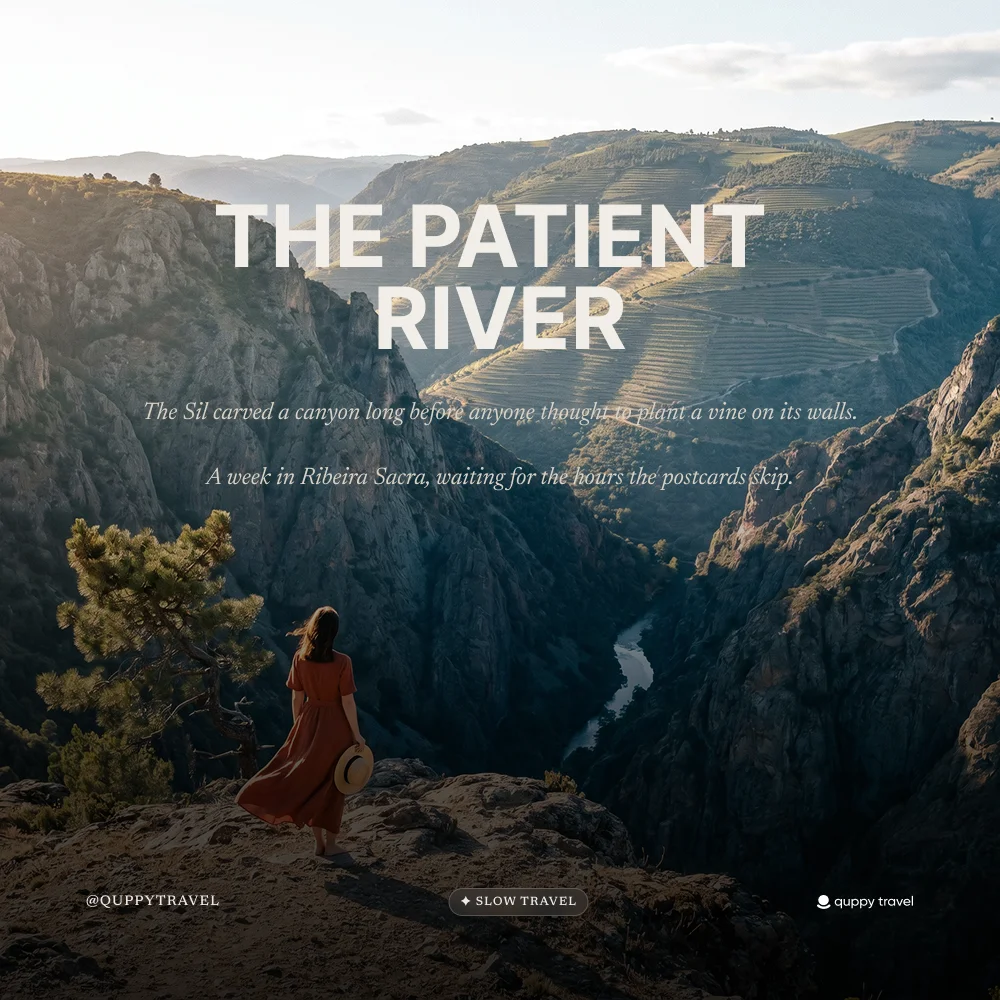
Above the village of Parada de Sil there is a lookout the maps call the Balcóns de Madrid — the Balconies of Madrid — for a reason nobody I asked could quite agree on. It is a lip of rock with a railing, and beyond the railing there is nothing for a very long way. The far wall of the canyon stands almost five hundred metres above the water. Someone has ruled the whole of it into vineyard terraces — thin horizontal lines that follow the contour like the rings inside a felled tree. It takes a moment to understand what you are looking at. Each line is a place where a person stands to work.
I put both hands on the railing. The stone had held the morning sun and gave it back as a low warmth; the wind coming up the wall was cooler, and carried broom and dust and something green underneath. My body did the involuntary arithmetic that bodies do at a great edge — a small tightening, a recalibration of where the ground is. I waited until it passed. Then I stayed longer.
The village keeps vertical time
In Parada de Sil the distances are not the distances a map shows. Everything is either up or down. The café is a two-minute walk and a hundred metres of descent from the guesthouse; the church is level, but the churchyard falls away behind it so steeply that the dead have a better view than the living. You learn to measure the day in ascents. Twice I misjudged an afternoon and arrived somewhere I had not earned the breath for.
The village empties at one o’clock and does not refill until five. In the shuttered middle of the day the heat stands in the lanes like water in a glass. The only movement is the cats. And one old woman who waters her geraniums at three regardless — the drops going dark on the hot stone, gone before they reach the gutter. The cicadas keep the time nobody else is keeping. I took my book to a bench in a wedge of shade and did the one thing the place clearly wanted of me, which was very little.
Water that had to be earned
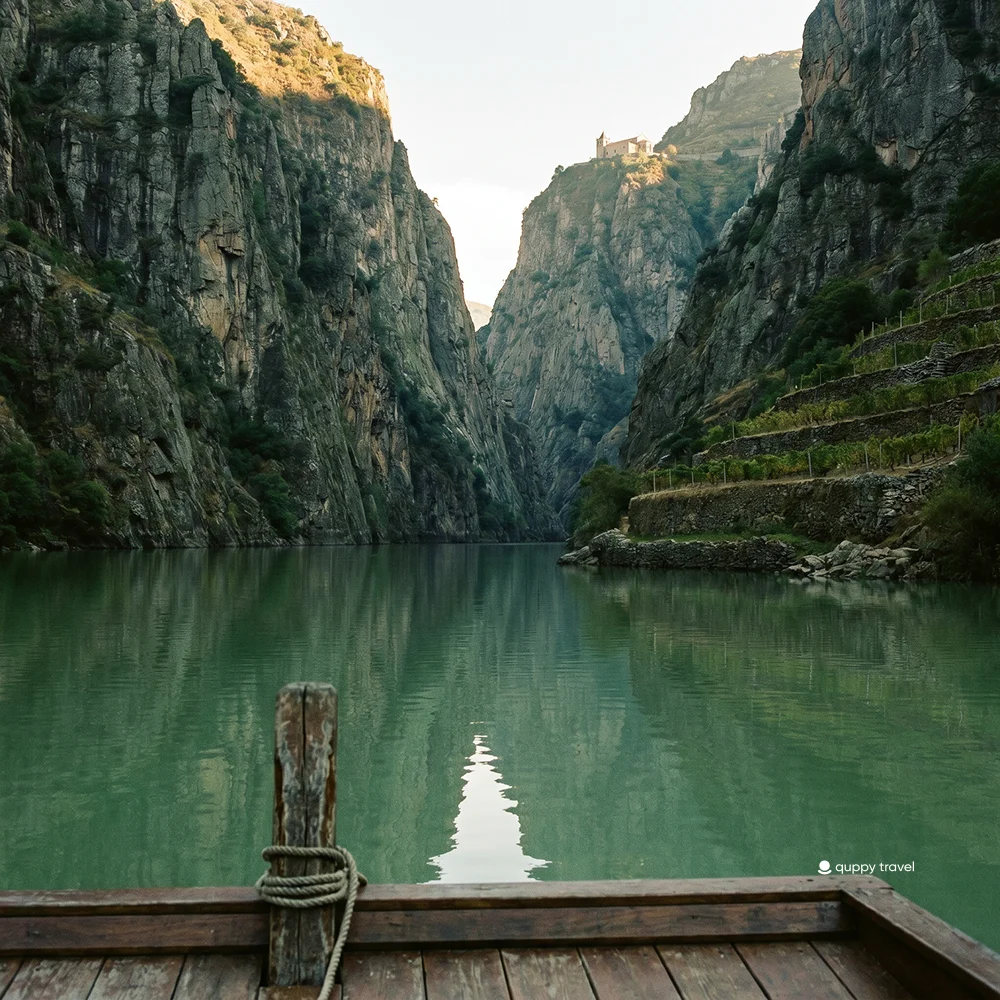
On the third day I took the boat. It is the way most people see the canyon, and I had been avoiding it for exactly that reason, which was a small vanity I decided to put down.
From the water the scale rearranges itself. The walls that had been a view from the rim became the whole sky. The catamaran turns at the point where the monastery of Santa Cristina stands out of sight in its chestnut wood, high above. Then it comes back the way it came. The canyon opens onto nowhere else — it only deepens, and then relents.
The guide said a thing I have not stopped turning over. Some of these vineyards, she said, can still be reached only from the river. No road goes to them.
At harvest the grapes come down the wall in baskets and small rail-carts to a waiting boat, the way they have for centuries, because the slope is too steep for anything a machine can do. They call it heroic viticulture. The word is not marketing. Every litre of this wine has been carried by a person, up and down a grade that would frighten a goat, in a heat that settles into the terraces and does not move.
The monks who built here were not hiding, whatever the brochures say. They were choosing a rate of time. The canyon offered a place where a day could only ever be a day — no faster, no fuller — and where the work of paying attention had a whole vertical wall to practise on. I understood the impulse better from the water than from any of the reading. You cannot skim a place that is mostly straight up and straight down. You take it at the speed it agrees to, or you do not take it at all.
I thought about how much of what we call beautiful is really just someone’s patience, made visible from a safe distance.
The vertical vineyards
The next afternoon I walked up into the terraces above Doade, where a small grower was pruning in the last usable light. He straightened when he saw me — not unhappy for the excuse — and we talked in the pidgin of my poor Spanish and his patient Galician and a great deal of pointing.
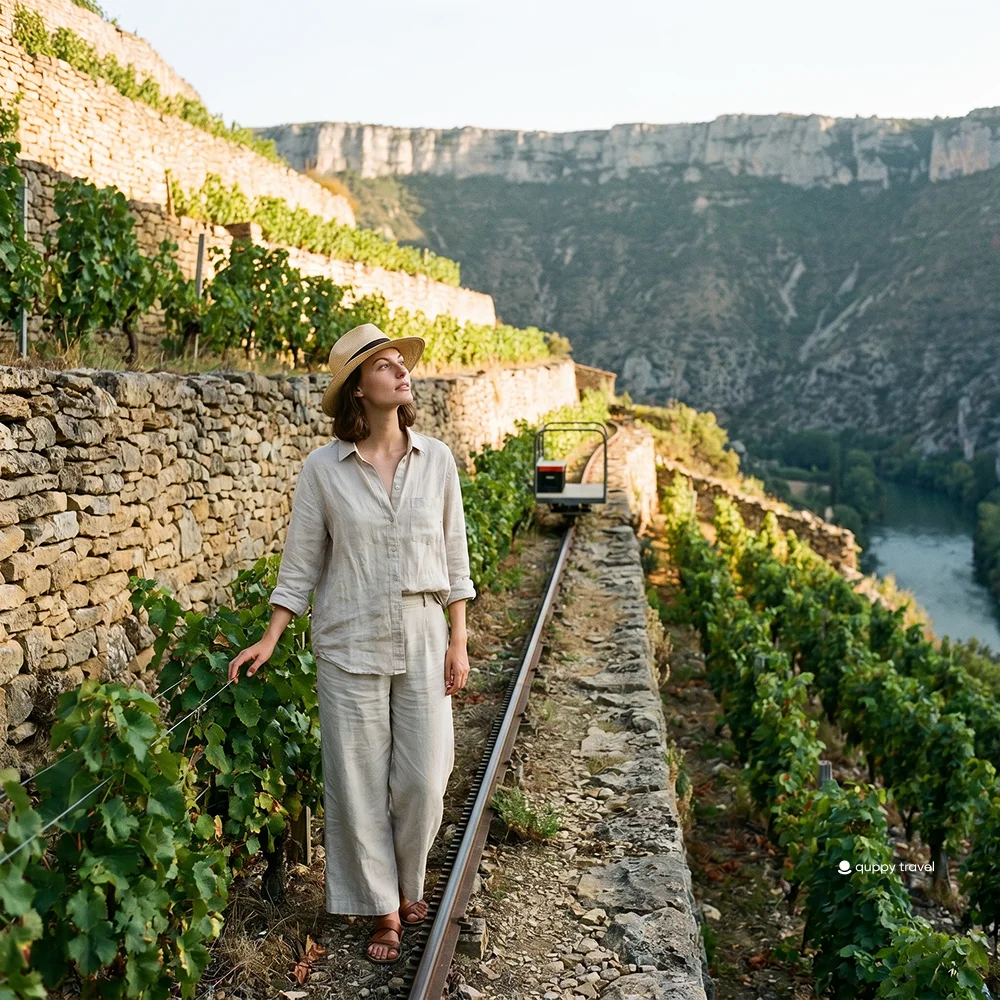
The terraces are called socalcos. Up close they are dry-stone walls, thousands of them, holding a metre or two of soil against gravity, and between the walls the vines are trained low. Mencía for the reds, Godello for the whites — names that meant nothing to me and everything to him.
He showed me the monorail: a thin toothed rail, like a miniature funicular, that carries a small platform up the slope so a body does not have to. His grandfather had carried everything on his back. His knees were the proof; he tapped them and laughed. He grows about four thousand bottles a year and sells most of them within fifty kilometres of where we stood.
I bought two bottles of the Godello, still cool from a shed cut into the hillside. There was no card machine, and there was never going to be one. He totalled the bottles in a cloth-bound ledger with a pencil worn to a stub, then turned the book so I could read the figure. I sent it through Quppy while he wrapped the second bottle in a page of newspaper — the newest thing in that shed by about four hundred years, and the only thing in it I could not have explained to his grandfather.
San Pedro de Rocas
Scene-type tag: named-specific — LOCATION REFERENCE REQUIRED: San Pedro de Rocas, Esgos (Ourense)
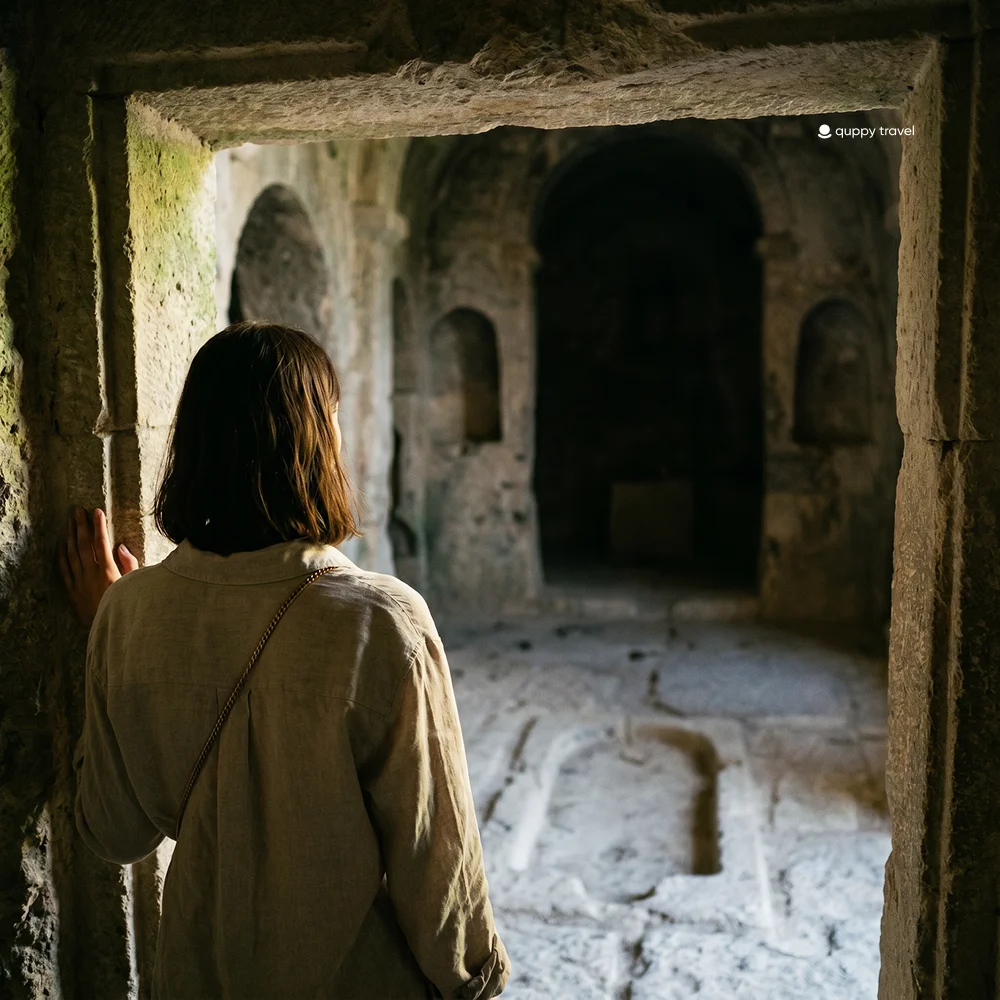
The oldest thing in the canyon is not the river’s doing but the monks’. San Pedro de Rocas sits back from the Sil, in an oak wood on the road to Esgos. It is not so much built as excavated — three chapels hollowed into a single outcrop of rock, the earliest of them older than most of the words we use for old.
A community was here in the sixth century. It left. It was found again three hundred years later by a hunter sheltering from rain.
Inside, the rock does the work the walls do elsewhere. It is cold in the way only stone is cold — a cold with no draught in it. Graves are cut straight into the floor, worn shallow, shaped for bodies smaller than ours. A single low doorway holds a rectangle of green so bright it looks like a lit screen. I stood on the threshold and let my eyes forget the sun.
I had the borrowed book with me — the paperback from the small shop in Coimbra that I have carried through two months and one lagoon and have quietly stopped pretending I will return. I read four pages sitting on a stone in the wood, where the only sounds were a woodpecker and, very far below, the part of the river you cannot see from here and never entirely stop hearing.
In his Lisbon piece last month, Oscar made the case that a great city can be eaten standing up, on your feet, in motion. He is right about Lisbon. This canyon runs the other way. Nothing here is done standing if it can be done sitting, and nothing is done today that can be done across a slower week.
The river’s hour
On the last evening I went back up to the rim.
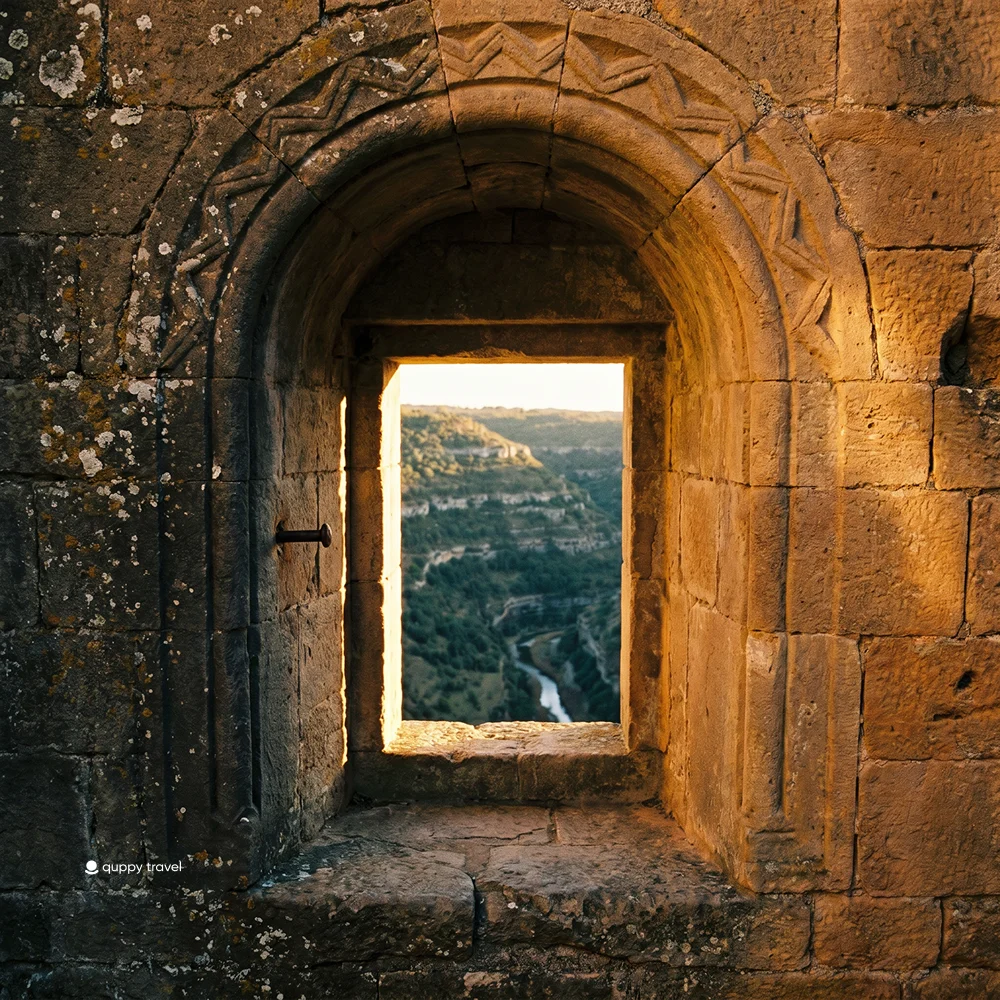
The heat had gone out of the stone but not yet out of the air. The river had turned the colour of slate, and the cold that comes up off deep water in a deep place had already begun to climb the wall toward me. I put both hands on the railing again and let the canyon do the arithmetic it does. It takes whatever you carried up here — your plans, your hurry, the small urgent business of your one life — and sets it against five hundred metres of rock and a river older than counting. Until you are exactly the size you actually are.
Not smaller. Located.
The cold reached my hands first. I stayed until it reached the rest of me. Then I walked down through the dark toward the two benches and the last train — lighter by the precise weight of everything I had brought that the river had simply outlasted.
The river was here first. It will be here long after. In between, for one week, it let me keep its hour.
— M.