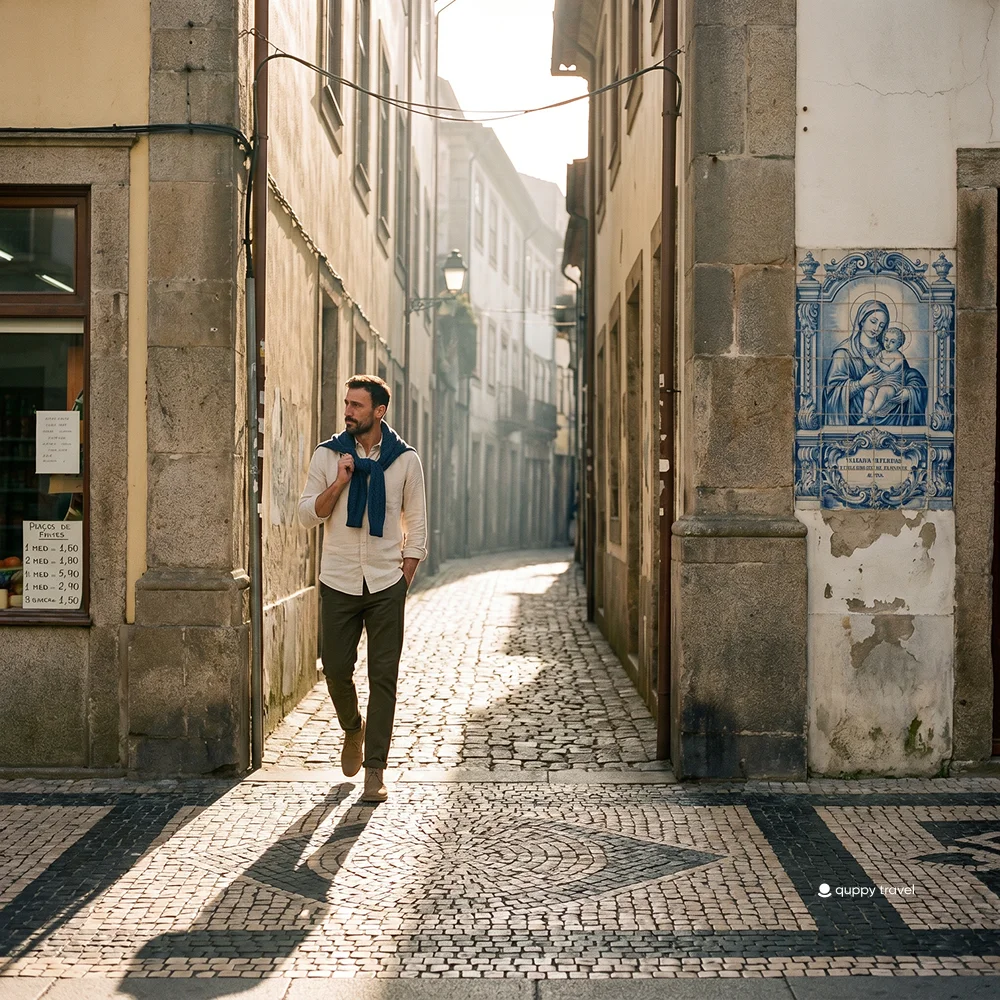
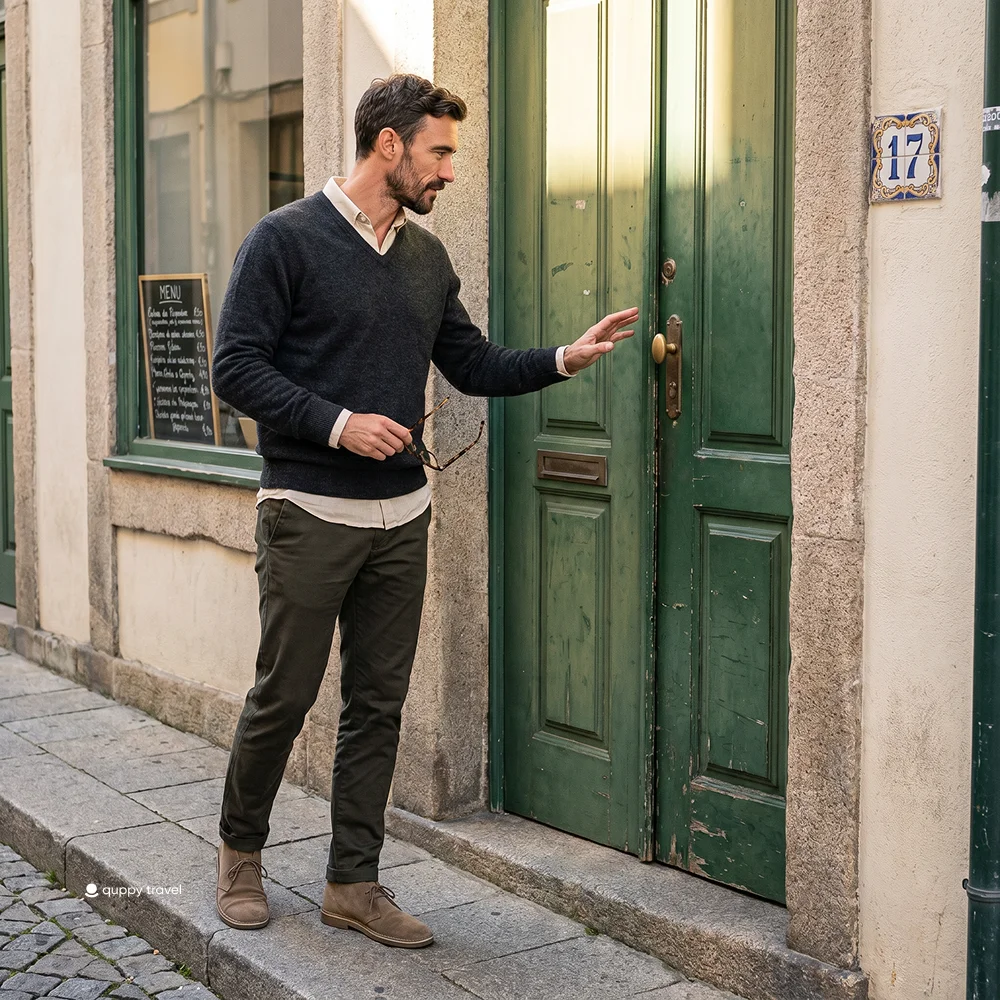
The street was empty in the way that only Portuguese streets are empty on a Sunday at noon — not abandoned, just waiting. The windows were open. The radios were on. Somewhere a grandmother was yelling something affectionate at a grandson who was not listening. And from inside a green door on Rua de São Victor, on the wrong side of Bonfim for any guidebook to care about, came a smell I would recognize if you blindfolded me and flew me to the moon.
Beans. Chouriço. Something older and stranger — a slow, iron-rich hum under the bright smoke of the sausage, the faint sizzle of fat that had been finding its way out of the pot since dawn, and the low bubble of something thick that had stopped needing to be stirred hours ago. It was the smell of a kitchen that had started cooking before anyone was awake and wasn’t in any hurry to finish.
I stopped on the sidewalk, and I hadn’t even knocked on the door yet.
My friend Rui — a Porto architect who thinks tripas à moda do Porto is more important than the Torre dos Clérigos, and who is probably right — had given me one instruction: “Sunday, one o’clock, tell her I sent you. Don’t look at the menu. She’ll decide.” I followed that instruction to the letter, which is unusual for me, because usually I look at the menu.
The Pact
Before we go in — the story. You need it for what comes next.
In 1415, the city of Porto sent everything it had to outfit an expedition. Prince Henry the Navigator was sailing for Ceuta. The butchers of the city were told to cure all the good meat and send it on the ships. The people of Porto kept what was left: the tripe, the feet, the offal, the things that don’t travel well. They cooked those things with beans and made a dish out of them. And somewhere along the way — centuries, really — they started calling themselves tripeiros.
Tripe-eaters.
Imagine any other city doing this. Paris, I don’t know — naming itself after the cut of meat the rich left on the plate? It doesn’t happen. But Porto did it. And I think about that a lot, because naming yourself after what remained, after what others threw away, is a thing only a certain kind of city does. A city that is confident enough to make the leftovers the point.
I wrote to Mia last week about a library in Coimbra where bats eat insects to protect the books. She told me the story as if she couldn’t believe it herself. I told her about Porto, about the tripe, about the pact. We decided these are the same story in different costumes. People choose what to keep. The choosing is what becomes the place.
The Door, The Room
The owner’s name is Dona Ermelinda, and she is maybe sixty, maybe eighty — one of those Portuguese women whose age is unknowable because she moves like forty and looks like she’s seen things. She did not smile when I came in; she pointed at a table near the window and said, “Rui?” I nodded. She said, “Siéntese,” which she thought was Spanish and I thought was sweet, and walked back to the kitchen.
The room held maybe twenty people. Seven tables. Three generations at the one nearest the door — a grandfather in a blazer over a sweater vest, a grandmother arguing with a teenager about a phone, two parents who had given up and were just eating bread. The couple next to me were not speaking. They had been married forty years, I would guess. They communicated by wine pour. A priest sat alone in the corner with a book and a glass of white and was doing the thing priests do, which is to eat like a man who knows that God forgives almost everything.
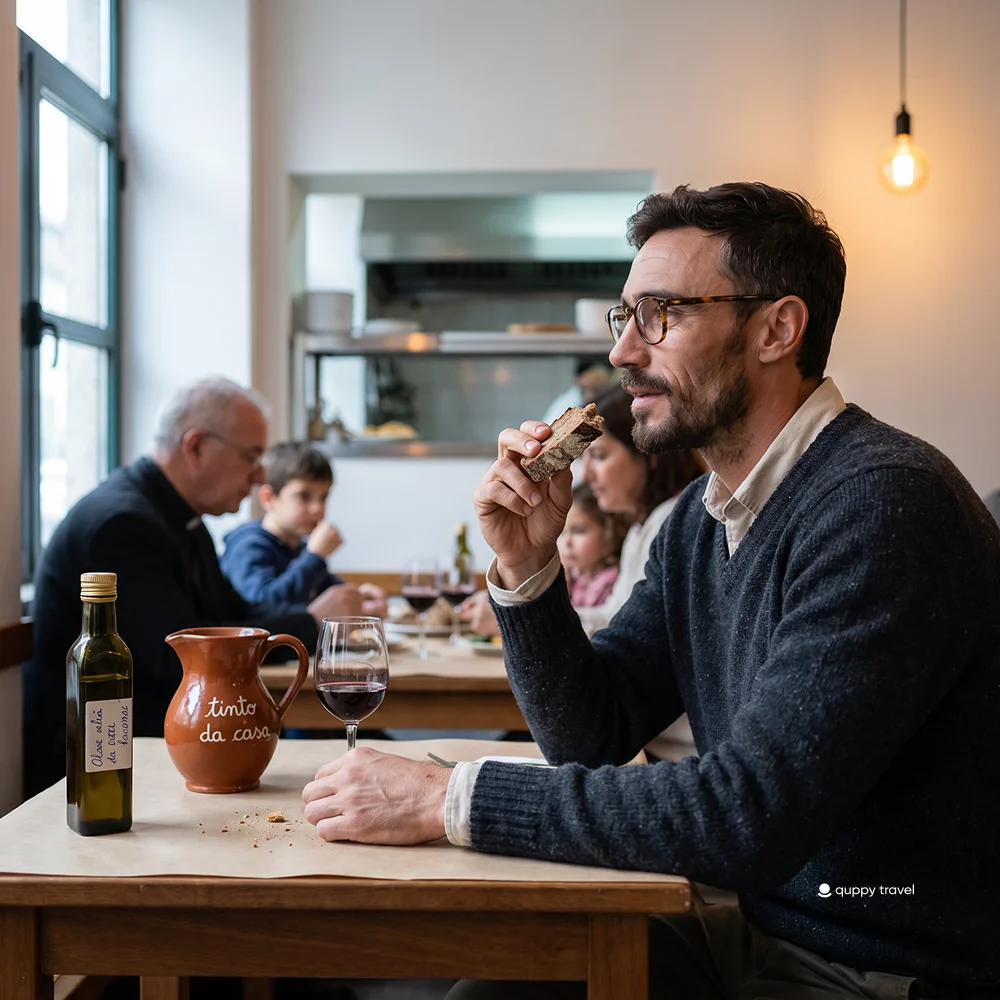
There was no music, only a football match on a television in the corner with the sound off — which is the correct volume for football in a tasca. The tablecloths were paper over something plastic, and the glasses had the name of a cellar stamped on the bottom. The bread arrived without being asked.
I tore into it and the crust crackled under my thumb, and inside it was warm — not hot, warm, the way a sweater is warm. The butter was not on the table, because butter is not really a Portuguese thing at lunch unless you ask, and asking marks you as a foreigner, which I was, but I was trying.
The wine came in a pitcher. Tinto da casa. Ermelinda poured it herself, splashed a little on the paper, did not care. “Vai beber,” she said. Drink. I drank.
The Dish
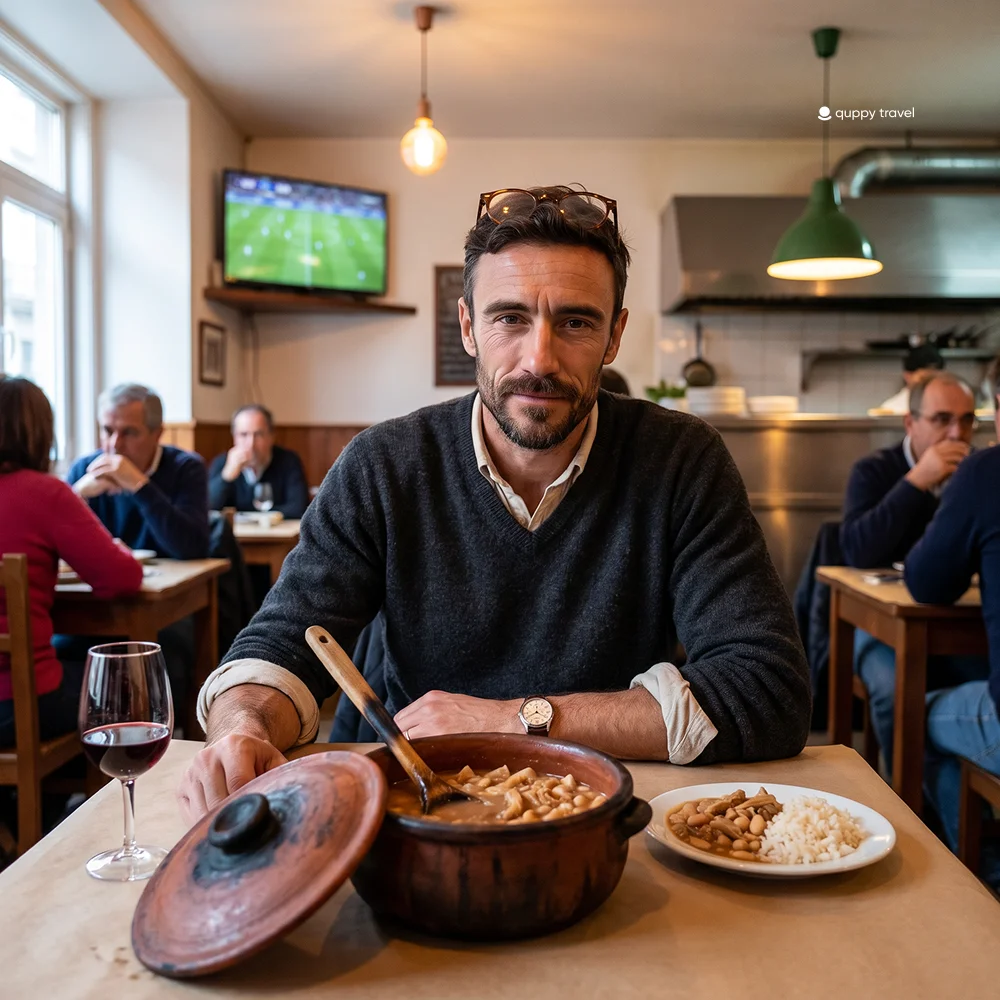
It arrives in a clay pot.
That is the first thing. Tripas à moda do Porto doesn’t come plated. It comes in a round, low, heavy clay pot — a cataplana-cousin but rougher, darker, older-feeling — and you serve yourself with a wooden ladle that has burned black in two places. The lid comes off and the steam hits your face like a memo from a kitchen that started before dawn.
And then you look inside.
White beans, yes — fat, creamy, feijão branco, the kind that has absorbed every flavor in the pot because it has been sitting in it for four hours, bubbling faintly at the edges where the clay holds the heat. The tripe, cut into thin strips, is no longer even chewy — rendered by time into something closer to silk than meat. Chouriço, red and oily, sits on the surface blooming paprika into the broth in small dark clouds that drip down the side when you move the ladle. Presunto, cubed, melting at the edges.
Below the sausage and cured ham: a few pieces of pork — the cheek, the belly, whatever the butcher gave up that morning. Slices of pig’s ear, which you can spot by the translucent cartilage curl. A bay leaf, drowned. Cumin somewhere. A note of saffron that I wouldn’t have placed if Ermelinda hadn’t flicked her eyes at the pot and said, “Açafrão,” when she saw me trying to name it.
You ladle it onto rice. Not with the rice — next to it, on the same plate, so you can steer the spoon between them. The rice picks up the broth. The broth picks up the rice. By the third bite you stop keeping them separate.
I took a long breath between spoonfuls. It is not a dish you eat quickly. It is the opposite of quickly. It is a dish that insists on the hour.
There is something about tripe that most people refuse before they taste it, and I get it — the word sits badly in the mouth. Offal. Variety meats. All the language we invented to apologize for eating the whole animal.
But cooked this way, for this long, with these beans — it isn’t offal. It isn’t even tripe, really, the way we think of tripe. It’s just… time. It is what happens to time when you leave it in a pot with salt and fat and patience.
I ate half my plate in silence, because I did not want to talk and I did not want to think. I wanted to chew, slowly, and watch the priest across the room cut his bread into three equal pieces with the focus of a man who knows exactly how much bread is correct.
Vakho, the winemaker I drank with in Kakheti last month, told me that a good meal doesn’t ask anything of you except your attention. He said it in a cellar that smelled of qvevri and damp stone, and I thought he was being romantic at the time, the way winemakers are. Sitting in Dona Ermelinda’s tasca in Bonfim on a Sunday, halfway through a plate of something my great-grandmother would have made, I knew he was right.
The Hours That Follow
The pot on the table was not finished, and that is how Portuguese Sundays work — you do not clear the pot. You leave it half-full, and somewhere between the second and third glass of wine, you return to it.
You find more. You find the last piece of chouriço you missed. You find the bean that absorbed the most broth. You take a small ceremonial second helping and you tell yourself it is the last one. It is not the last one.
The couple next to me had started talking. Quietly, in Portuguese, too low for me to catch the words, but the shape of it was clear: they were remembering something. He laughed once, short and surprised, the way you laugh when a memory catches you off-guard. She poured him more wine without looking at his glass.
The family at the door had descended into argument and reconciliation — the teenager was still on the phone, but now she was showing it to the grandmother, and the grandmother was squinting at it and nodding, and whatever was on the screen had been judged acceptable.
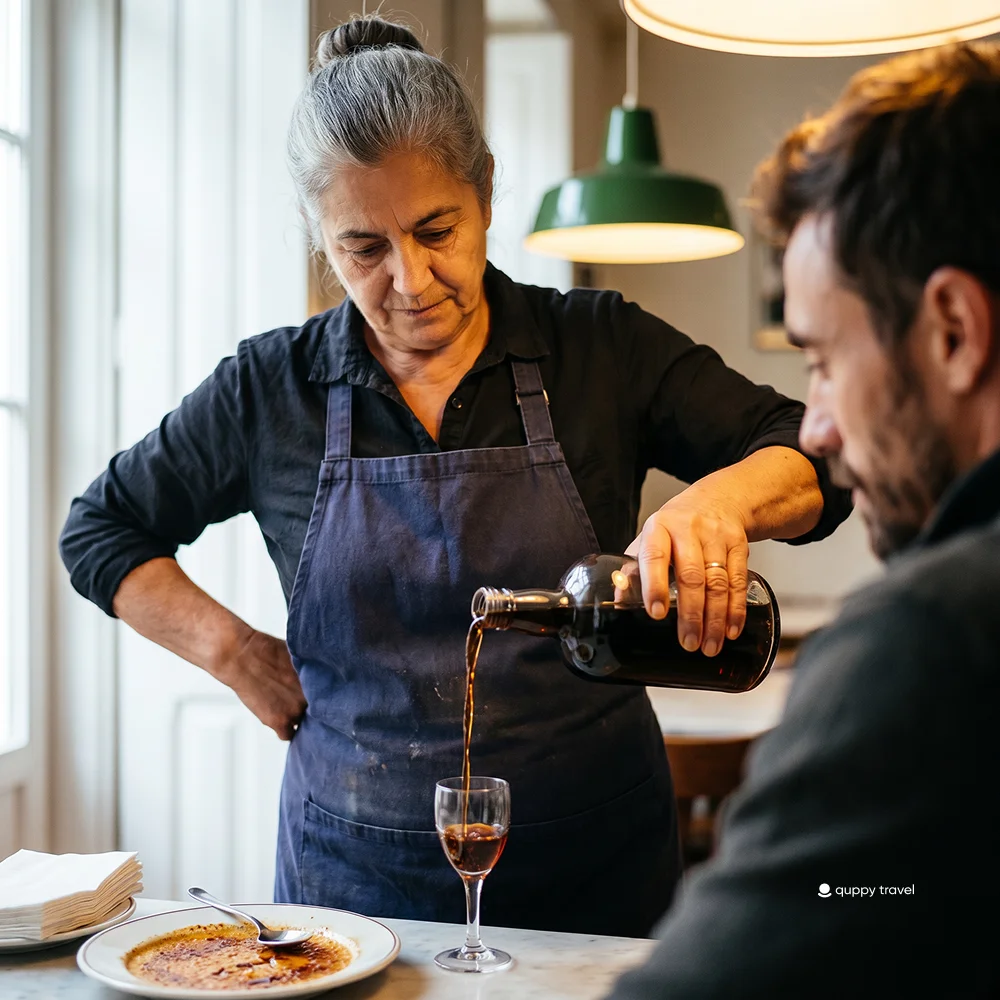
Dessert came without me asking: leite-creme, scorched on top, the crust crackling under the spoon with that small, specific pop that is the reason leite-creme exists. A glass of port — tawny, not ruby, which is the correct choice when you are already full. Ermelinda poured the port herself, one hand on her hip, the other tilting the bottle, and said, “Bom?” It was the first Portuguese word she had spoken to me that I understood without translation. I said, “Muito bom.” She nodded once and moved on.
I paid at the counter. The card reader was older than me, and I tapped my Quppy card against it — it beeped twice, thought about the problem for a second, then accepted the transaction in a currency I had not used that morning. Ermelinda looked at the small screen with mild interest, like someone watching a cat solve a puzzle. “Novo,” she said. New.
I nodded. She nodded. I left the change in coins on the counter, which is not a tip exactly — it is a small gesture that means I will come back.
Back Outside
The street was still quiet, the radios were still on, and the same grandmother was probably still yelling at the same grandson. I walked back toward Bolhão with a full stomach and the particular slow clarity that comes after three hours at a table. Porto in the afternoon smells like the Douro — green-brown water, hot granite, and, from every open window, something that has been cooking for too long in the best way.
Mia would say I am sentimental about the wrong things, and I would say she is sentimental about the right things for the wrong reasons. We both spend our trips looking for what a place decided to keep — she finds it in the silence of a library full of bats, I find it in a pot of beans cooked since breakfast on a street without a guidebook entry.
The tripe is not the point. The tripe is never the point. What Porto kept for itself, after sending everything good out into the world, was not a dish. It was a way of sitting at a table with people you do not know yet and eating something your grandmother’s grandmother would recognize.
I did not catch the priest’s name. I should have asked. Next time.