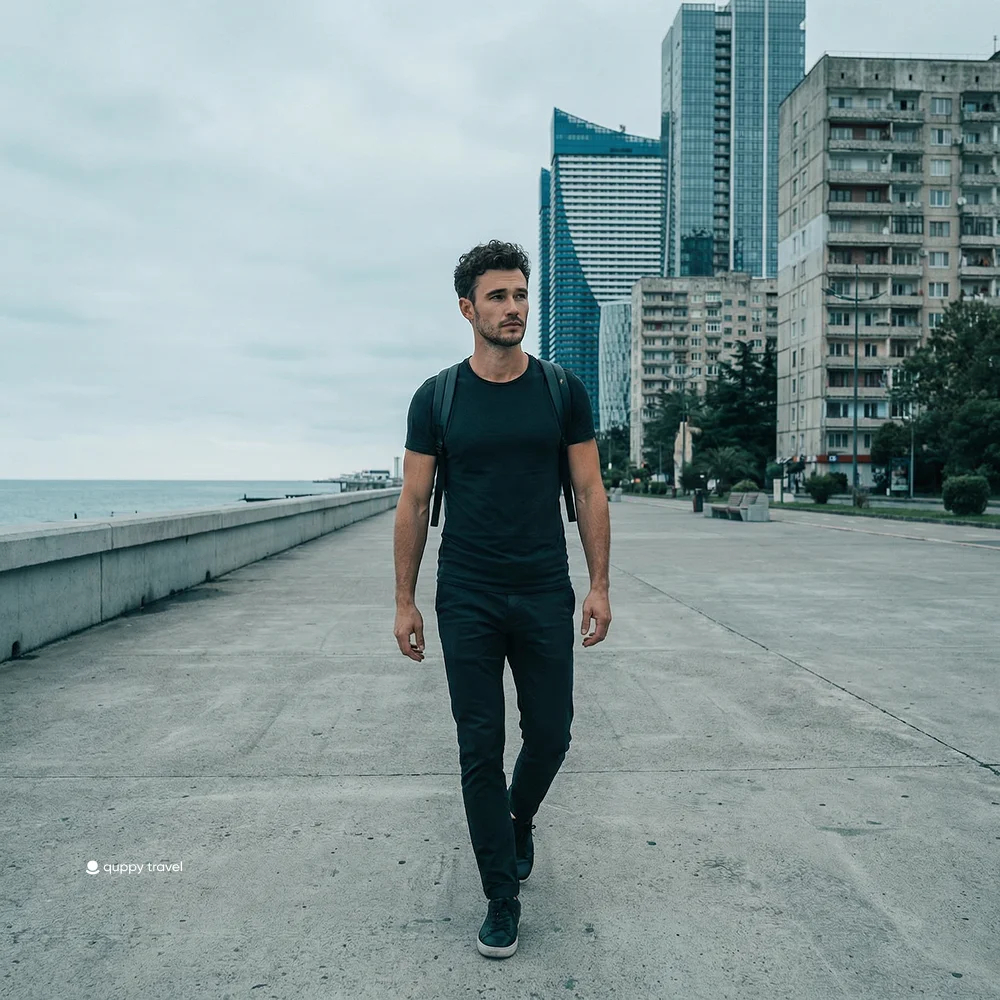
I gave Batumi ten days. The pitch was simple: a Black Sea port city with a skyline that looks like it was designed by three different architects who never spoke to each other, fast-growing tech infrastructure, and rent that makes Tbilisi look expensive. On paper, it reads like a nomad’s next frontier. I went to see if the paper was lying.
The short answer: Batumi is almost ready — the long answer involves some asterisks.
The Signal
First things first — connectivity. I ran speed tests at nine locations across the city over five days (yes, I have the spreadsheet). Here’s what I found:
- Average download: 95 Mbps. Solid. Not Tbilisi-level (which averaged 140 in my March tests), but enough to run video calls without the freeze-frame face.
- Best spot: Terminal Coworking on Chavchavadze Street — 180 Mbps down, 60 up, and a monitor you can rent for €3/day.
- Worst spot: A beachfront café whose name I won’t mention. 12 Mbps. The espresso was also terrible. Correlation isn’t causation, but I have my suspicions.
- Mobile data (Magti 4G): Averaged 35 Mbps along the boulevard. Dropped to 15 near the port. Topped up my SIM through Quppy in about ten seconds — same flow as Tbilisi, no surprises.
The city-wide free Wi-Fi (Batumi Wi-Fi) exists. I tested it at four spots along the promenade. Average: 8 Mbps. Fine for checking email. Not fine for anything that matters.

The Workspace Situation
Batumi has fewer coworking options than Tbilisi — but the ones that exist are decent. Terminal was my base: clean layout, decent chairs, a kitchen that had actual milk (not the powdered stuff that haunts coworking spaces in Southeast Asia). Day pass: 20 GEL (~€7). Monthly: 250 GEL (~€85). For context, Fabrika in Tbilisi runs about €150/month. The delta is real.
There’s a second space — Impact Hub Batumi — near the university. More startup energy, more Georgian language on the whiteboards, fewer nomads. I spent two afternoons there. The Wi-Fi held at 110 Mbps. The crowd was younger, louder, and building things — I liked the energy more than I expected.
The third option is cafés. Batumi has a surprising number of laptop-friendly spots along Gorgiladze Street and the area behind the Drama Theatre. My top three: Café Literaturuli (fast Wi-Fi, good flat white, three-plug power strip at every table), Black Lion (darker, quieter, better for deep work), and the unnamed place next to the Radisson that has the best natural light I’ve found in any Georgian café. I never got its real name. The sign was in Georgian and I kept forgetting to photograph it.
The Living Layer
I rented a one-bedroom apartment on Kobaladze Street — seven minutes from the boulevard, twelve from Terminal. Monthly rate: 800 GEL (~€275). Furnished, functioning kitchen, a balcony with a partial sea view if you leaned at the right angle. The building was Soviet-era on the outside and surprisingly modern inside. Hot water was consistent. The neighbours were quiet. The elevator worked four days out of five.
For comparison: a similar setup in Tbilisi’s Vera or Sololaki would run 1200-1500 GEL. In Lisbon, don’t even ask.
Groceries are cheap. Goodwill supermarket on Gorgasali became my default — decent produce, local cheese that costs almost nothing, and a bakery section that Oscar would never leave. I averaged about 15 GEL/day on food when I cooked. On the days I didn’t cook (which was most days, honestly), restaurants ran 25-35 GEL for a full meal.
The banking layer was smooth. I converted EUR to GEL through Quppy before arriving — the rate was better than the airport exchange by about 4%. Withdrew cash from a TBC Bank ATM on the boulevard. The whole conversion-to-withdrawal pipeline took under two minutes. For ongoing expenses, I pushed GEL to my card and paid contactless everywhere. Batumi is surprisingly card-friendly for a city this size.
The Infrastructure Report
This is where it gets interesting — and where Batumi reveals that it’s still in beta.
Transport:* The city is walkable if you stay in the centre. Most of what you need fits inside a 2km radius from the boulevard. Beyond that, Bolt works (rides average 3-5 GEL), and there’s a bus system that I used exactly once before switching to Bolt permanently. The marshrutka to Tbilisi runs about 5 hours and costs 25 GEL. I took it twice. The second time, the driver played folk music at a volume that suggested he was trying to communicate with a neighbouring country.
Healthcare:* I didn’t need it (fortunately), but I scoped it out. MediClub Batumi is the expat-friendly option — English-speaking staff, modern equipment, walk-in appointments. A friend who’d been here longer told me a GP visit cost about 80 GEL (~€27). Prescriptions are cheap and pharmacies are everywhere.
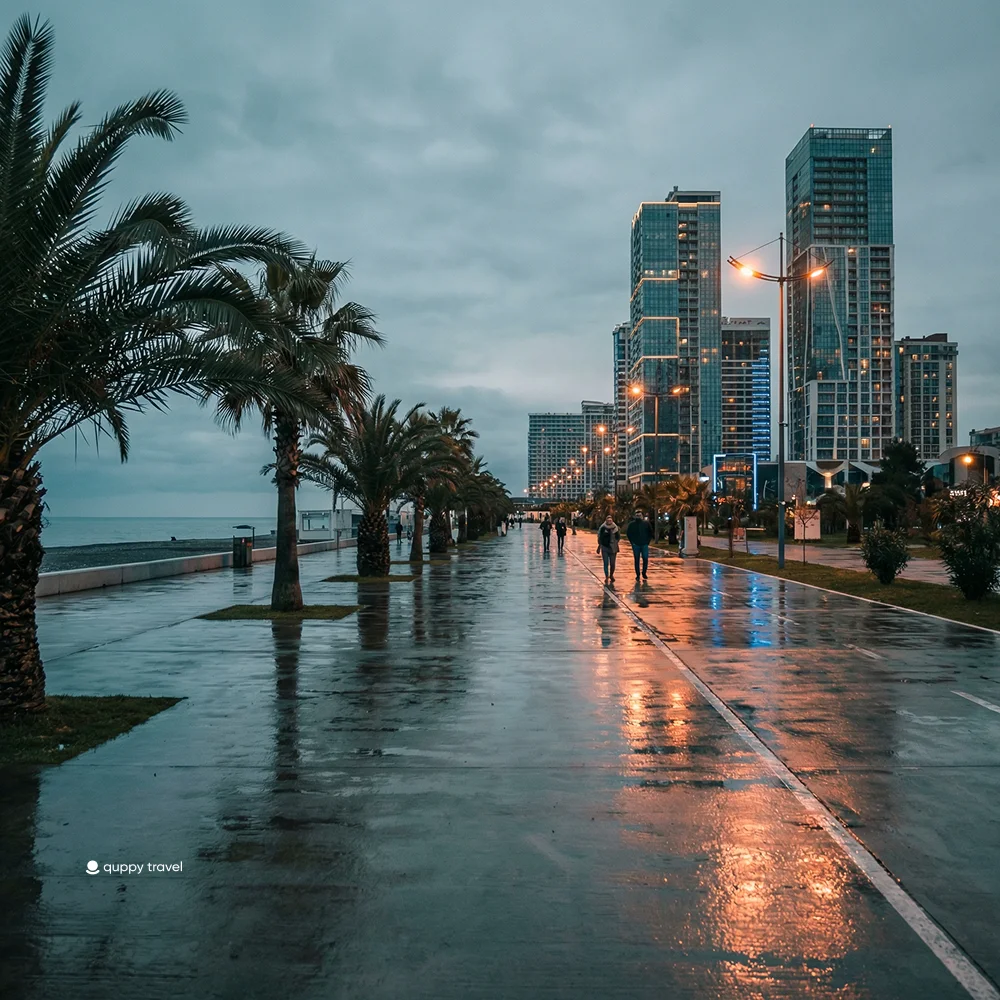
The Casino Problem:* Batumi has a lot of casinos — more than you’d expect for a city this size. They dominate the skyline, they light up the boulevard at night, and they attract a crowd that has nothing in common with the remote work community. It’s the city’s biggest identity tension — is Batumi a tech hub or a gambling hub? Right now, it’s both, and the two scenes don’t interact much — but it gives the downtown a slightly split personality after dark. Mia would find it jarring. Oscar would find the bar.
Weather:* I was there late March into early April. Overcast most days, rain on three of them, temperatures around 14-18°C. Not beach weather. The locals say summer is hot and humid — 30+ and crowded. I suspect the optimal nomad window is April to June and September to October. The shoulder months.

The Human Bandwidth
Here’s the part I didn’t expect. Batumi has a community forming — small, early, but real. I met four other remote workers at Terminal during my first week — two developers from Turkey, a copywriter from Ukraine, and a product designer from Berlin who’d been here three months and had no plans to leave.
We had dinner on night four. The conversation drifted from framework preferences to whether Batumi could handle a real influx of nomads without losing what makes it interesting. The Berlin designer — her name was Lena — made a point that stuck: “The city hasn’t decided what it wants to be yet. That’s either an opportunity or a warning.”
She’s right, and I think it’s both — opportunity and warning, depending on how fast the city moves.
This isn’t Tbilisi, where the nomad infrastructure is established and the community is three years deep. Batumi is earlier in the curve — the coworking spaces are emptier, the events are fewer, the Telegram groups have under 200 people. But that also means it’s cheaper, less performative, and you can still meet locals who aren’t exhausted by the twenty-seventh digital nomad asking about laundry services.
The Verdict
Batumi is a strong B+. Here’s how I’d break it down:
Connectivity: 8/10 — fast enough, reliable enough, and the gap with Tbilisi is closing. Workspaces: 6/10 — limited options, but the ones that exist are good value (needs two more coworking spaces to be genuinely competitive). Cost of living: 9/10 — significantly cheaper than Tbilisi, absurdly cheaper than Western Europe, and your money stretches LONG here.
Community: 5/10 — early stage, and if you need a built-in nomad scene on arrival, this isn’t it yet. Livability: 7/10 — good apartments, walkable centre, decent food, sea air, though the casino vibe drags it down slightly. Overall: a city loading its next version — the foundation is solid, the potential is obvious, and the price-to-quality ratio is the best I’ve found in the Caucasus.
This is a city for experienced nomads who’ve done the Tbilisi thing and want somewhere quieter, cheaper, and a little rough around the edges — developers and writers who need fewer distractions (ironic, given the casinos), and anyone planning to spend a slow month or two. It’s not for first-time nomads who need hand-holding, or people who want a deep coworking community from day one. And if you’re allergic to construction noise, look elsewhere — Batumi is building. Constantly.
I came to test whether Batumi is ready. It’s not — not completely. But neither was Tbilisi three years ago. And I remember what happened there. Sometimes the best move is to arrive before the city finishes loading.